
Last Updated on February 19, 2024 by Ibrahim Bat
Caffeine is the most widely consumed drug worldwide, primarily through the consumption of coffee. However, some medical conditions, especially due to potential pharmacokinetic interactions with anti-anxiety medications, require limited caffeine diets for patients taking certain prescribed drugs. Some patients switch from caffeinated coffee to decaffeinated coffee to avoid caffeine intake. Others turn to decaffeinated coffees because of the insomnia and jitters caused by caffeine.
So, health concerns caused by caffeine, such as insomnia and jitters, direct people towards decaf coffee. The popularity of decaf coffees is increasing day by day.

Google Reports Increasing Interest in “Decaf Coffee” Searches

What is decaf Turkish coffee?
The term decaf Turkish coffee refers to Turkish coffee with its caffeine content reduced by at least 97%. Coffee beans are significantly purified from caffeine using methods such as the “Swiss water process,” “mountain water (MWP) decaf process,” “solvent-based process,” “carbon dioxide process,” and “triglyceride process.” These coffee beans, with at least 97% of their caffeine removed, are ground to suit Turkish coffee, resulting in decaf Turkish coffee.
It is important to note that decaf coffee is not entirely caffeine-free. European Union (EU) regulations require decaffeinated coffee to contain 0.3% or less caffeine. However, the exact amount may vary depending on the decaffeination method and the type of coffee bean. (source)

Difference Between Decaf Coffee and Regular Coffee
| Decaf Coffee | Regular Coffee | |
|---|---|---|
| Caffeine Content | Significantly reduced (often 0.3% or less in the EU). | Naturally contains caffeine, amounts vary based on bean type, roast, and brewing method. |
| Processing | Undergoes a decaffeination process (e.g., Swiss Water Process, solvent-based methods). | Does not go through decaffeination. Processed normally after harvesting. |
| Flavor Profile | Might be slightly milder due to the decaffeination process, but modern methods retain much of the original flavor. | Robust and full, with flavor largely determined by bean origin, roast level, and brewing method. |
| Health Benefits | Contains most of the same antioxidants as regular coffee. Some concerns about trace chemicals from certain decaffeination methods. | Rich in antioxidants. Caffeine can have both positive and negative health effects. |
| Cost | Sometimes slightly more expensive due to additional processing steps. | Generally less expensive than decaf. |
| Primary Purpose | For those sensitive to caffeine, want reduced caffeine intake, or prefer evening consumption without sleep disturbance. | General consumption, and for those who desire the stimulating effects of caffeine. |
Decaf vs. Half decaf
| Decaf Coffee | Half-Decaf Coffee | |
|---|---|---|
| Caffeine Content | Roughly 3% of original caffeine (about 2.85 mg per 8 oz, considering regular coffee has 95 mg) | Approx. 50 mg per 8 oz cup (half the caffeine of regular coffee) |
| Production | Caffeine is removed from unroasted green coffee beans. The process typically uses water and a charcoal filter to separate caffeine. | A blend of 50% regular coffee and 50% decaf coffee. Typically, the same bean type is used for both. |
| Purpose/Preference | Ideal for those wanting minimal caffeine due to medical reasons, sensitivity, or personal choice. | Preferred by those who enjoy the coffee taste but aim to moderate their caffeine intake. |
| Flavor Profile | Might have a slightly altered flavor due to the decaffeination process. However, with high-quality beans and processes, the difference can be minimal. | Closer to the taste of regular coffee, given that it’s a blend of regular and decaf. |
| Variability | Caffeine content is generally consistent, though the exact amount can depend on the decaffeination method and coffee bean type. | Caffeine content might vary slightly depending on the brand, blend, and proportions used. |
How much caffeine is in decaf Turkish coffee?
Decaffeinated coffee, often called ‘decaf,’ undergoes a special process that eliminates at least 97% of its caffeine content. While its chemical makeup closely mirrors regular coffee’s, its caffeine content is drastically reduced, with beans typically boasting a mere 3 mg of caffeine. It’s worth noting that the precise caffeine levels in decaf, particularly Turkish decaf, can be influenced by factors such as the bean variety, the specific decaffeination technique employed, and the serving size. Various studies have pointed out that a standard 6-ounce (180 ml) serving of decaf coffee might possess anywhere from 0 to 7 mg of caffeine.
What’s so special about Turkish coffee?

Turkish coffee is a unique and culturally significant beverage in Turkey. Although the coffee itself is not of Turkish origin, the way Turkish coffee is prepared and served sets it apart from other types of coffee. In Turkish culture, Turkish coffee is crucial in hospitality, friendship, and courtesy. That’s why, in 2013, UNESCO recognized Turkish coffee as an Intangible Cultural Heritage.
On the other hand, Turkish coffee is distinct from other brewing methods in its preparation. For instance, Turkish coffee is made with the finest ground coffee. This means that the coffee beans are ground even finer than espresso. A finer grind creates more surface area on the coffee grounds. As a result, extraction increases.
Another thing that differentiates Turkish coffee from others is that it’s brewed in traditional copper pots called “cezve.” When making Turkish coffee, the coffee grounds are boiled in the cezve. With more heat, the coffee’s extraction increases even further. This results in a thick, aromatic, and wonderfully fragrant taste. Moreover, Turkish coffee uses a higher coffee-to-water ratio than Chemex, Hario v60, Kalita wave, and French press, resulting in a stronger brew. Additionally, since Turkish coffee is unfiltered, some coffee grounds can settle, while some remain suspended, enhancing its richness.
One crucial detail that makes Turkish coffee special is how it’s served. Turkish coffee is served in “fincan,” special ceramic, porcelain, or copper cups. Turkish coffee cups often have patterns and motifs reflecting Turkish culture. The quality and uniqueness of these cup sets are considered a sign of respect to guests, and some enthusiasts even collect them as a hobby.
In summary, Turkish coffee is more than just a beverage; its unique preparation, aroma, and serving style celebrate Turkish hospitality and tradition.
Related Article:
Is decaf still coffee?
Yes, decaf is still coffee!
Decaffeination does not significantly change the taste or aroma of coffee beans. Therefore, the taste and aroma of decaf coffee are largely like regular coffee.
However, the quality of the coffee beans can affect decaf coffee’s taste. If you feel that the taste of the decaf coffee you drink is worse than regular coffee, we recommend trying decaf coffee made from a different brand or a different type of coffee bean.
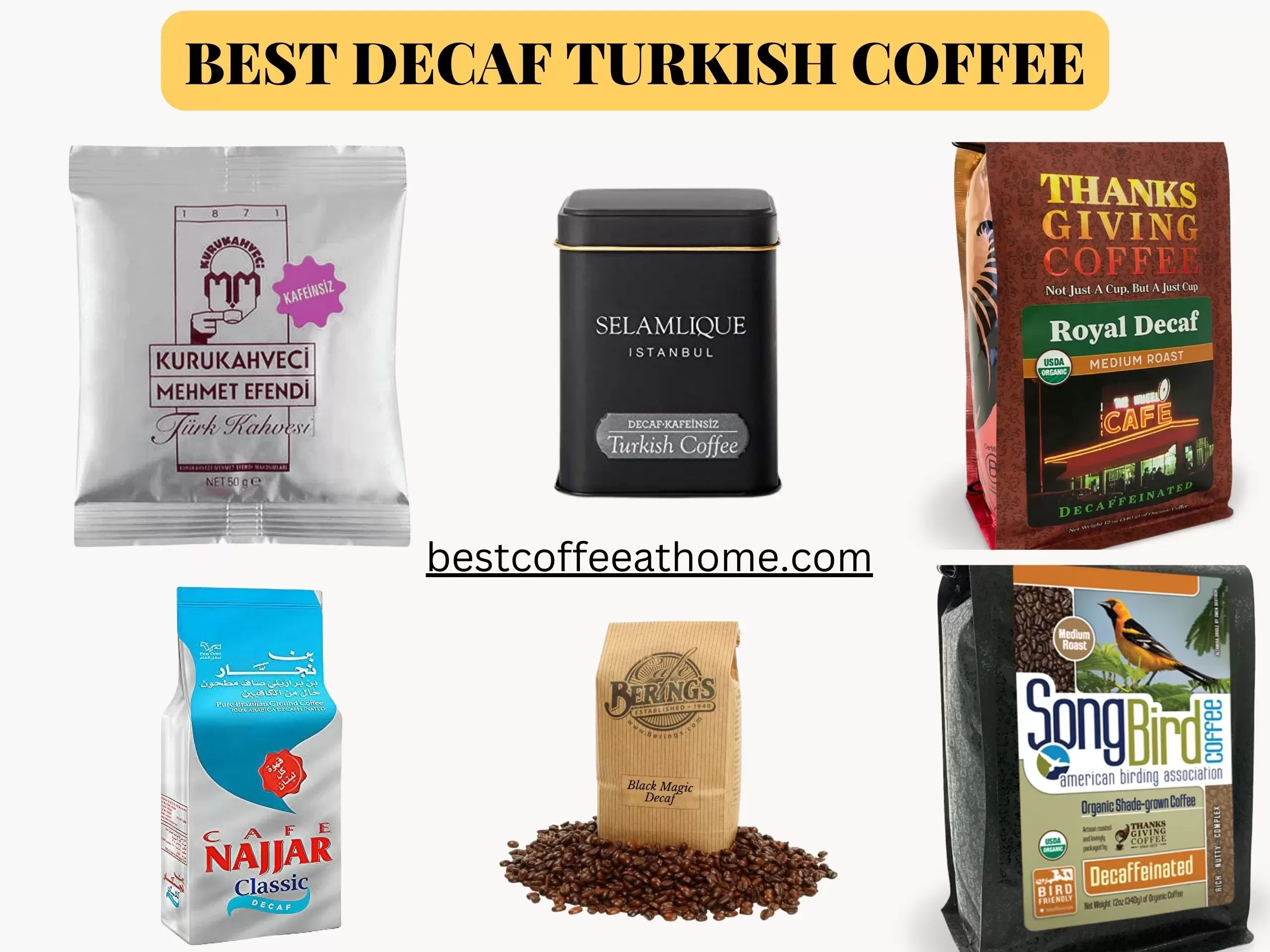
Best Decaf Turkish coffee brands
- Kurukahveci Mehmet Efendi is known for its range of coffee products, including a Decaf Turkish coffee catering to those who prefer a caffeine-free experience.
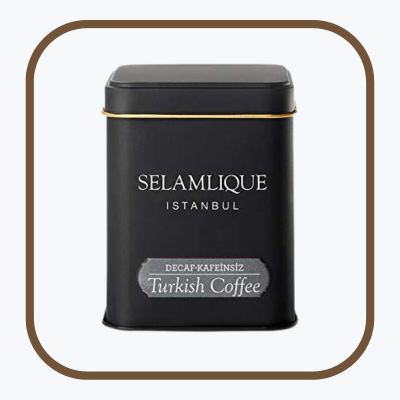
- Selamlique specializes in various coffee blends, and among their offerings is a Decaf Turkish coffee designed for individuals who seek the traditional taste without the caffeine.
- ‘The Royal Decaf’ represents a brand that provides Decaf Turkish coffee, ensuring consumers have an option without the usual caffeine content.
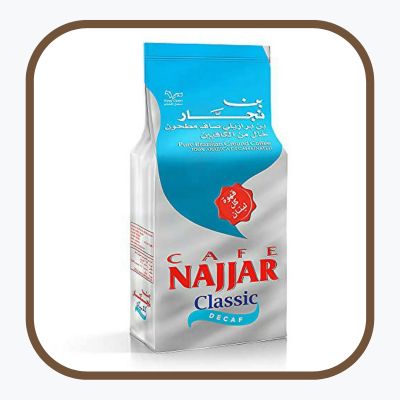
- Cafe Najjar, a brand with a rich history in coffee-making, includes Decaf Turkish coffee in their diverse product lineup, allowing consumers to enjoy the flavor without the stimulant.
- SongBird, with its commitment to variety, produces Decaf Turkish coffee, adding to the choices available for those avoiding caffeine.
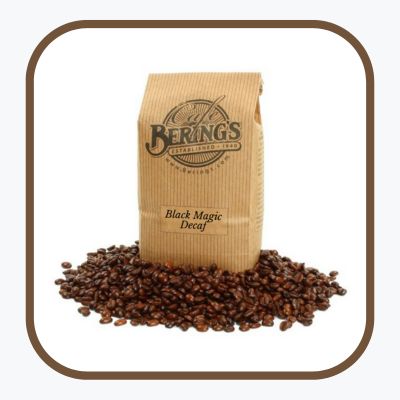
- Cafe Bering’s, with its focus on quality and tradition, has Decaf Turkish coffee as part of their product range, catering to a segment of consumers who prefer decaffeinated options.

Related: After Tasting Dozens of Turkish Coffee, We Found 7 Best Brands!
Decaf Turkish coffee recipe

Ingredients
- Cezve (a special pot for Turkish coffee)
- Small Cup
- Spoon
- Decaf Turkish coffee (extra fine grind)
- Water
- Sugar (optional)
Instructions
- Preparation: For a 60 ml cup, use a coffee-water ratio 1:10 (6 grams of coffee for every 60 ml of water). Adjust the quantity based on the number of servings.
- Mix: Combine decaf Turkish coffee and water in the cezve. If you prefer a sweeter brew, add sugar. Ensure your coffee is ground to an extra fine texture.
- Cook: On a medium heat, place the cezve on the stove. Stir once to blend. As the foam starts to rise, remove from heat. Important: Do not stir after placing it on the stove to retain the foam.
- Serve: Pour into cups, ensuring each gets an equal amount of foam. Wait 1-2 minutes before sipping to allow the temperature to decrease. Avoid drinking the thick layer of coffee grounds settled at the bottom.
Serving Tips
- Use an espresso cup if you don’t have a Turkish coffee cup.
- Always accompany with a glass of water. Take a sip before the coffee to cleanse your palate.
- Consider pairing it with Turkish Delight or chocolate for a complete experience.
Bonus: You can view our more detailed recipe for Turkish coffee here.