

Last Updated on January 27, 2024 by Ibrahim Bat
A cup of coffee brewed in the Aeropress is quite tasty. However, sometimes you might want to drink a stronger coffee or need espresso for your espresso-based coffee recipes.
Can Aeropress help you with this? Let’s find out!

Does Aeropress Make Espresso?
Quick answer: Technically, making espresso with an Aeropress is impossible. This is because the Aeropress does not have the pressure force required for espresso.
However, Aeropress can make a coffee concentrate with a strength and taste profile similar to espresso. But this won’t be a real espresso.
One of the main reasons for this is that espresso machines operate at a much higher pressure than Aeropress. While an average espresso machine operates at 9 bar pressure, this value is around 0.5 bar for the Aeropress.
Therefore, the espresso made by the Aeropress method is closer to coffee brewed in a moka pot than a real espresso.
Still, you can use the espresso-like coffee you get with the Aeropress in your espresso-based coffee recipes like latte, cappuccino, and americano.
Note: Espresso made with Aeropress does not form crema (foam layer) as in regular espresso 🙁
Related Recipes:
- Aeropress Standard Method 101
- Aeropress Inverted Method: Twist for Better Coffee
- James Hoffmann Aeropress Recipe
How to Make Espresso With Aeropress?
The only thing you need to do to brew espresso in an Aeropress is to make your normal brew in the Aeropress more concentrated than usual.
I will provide what you need to be careful about and tips to improve your coffee experience within the brewing steps.
Let’s take a look at what we need before we start.
What do You need for Aeropress Espresso?
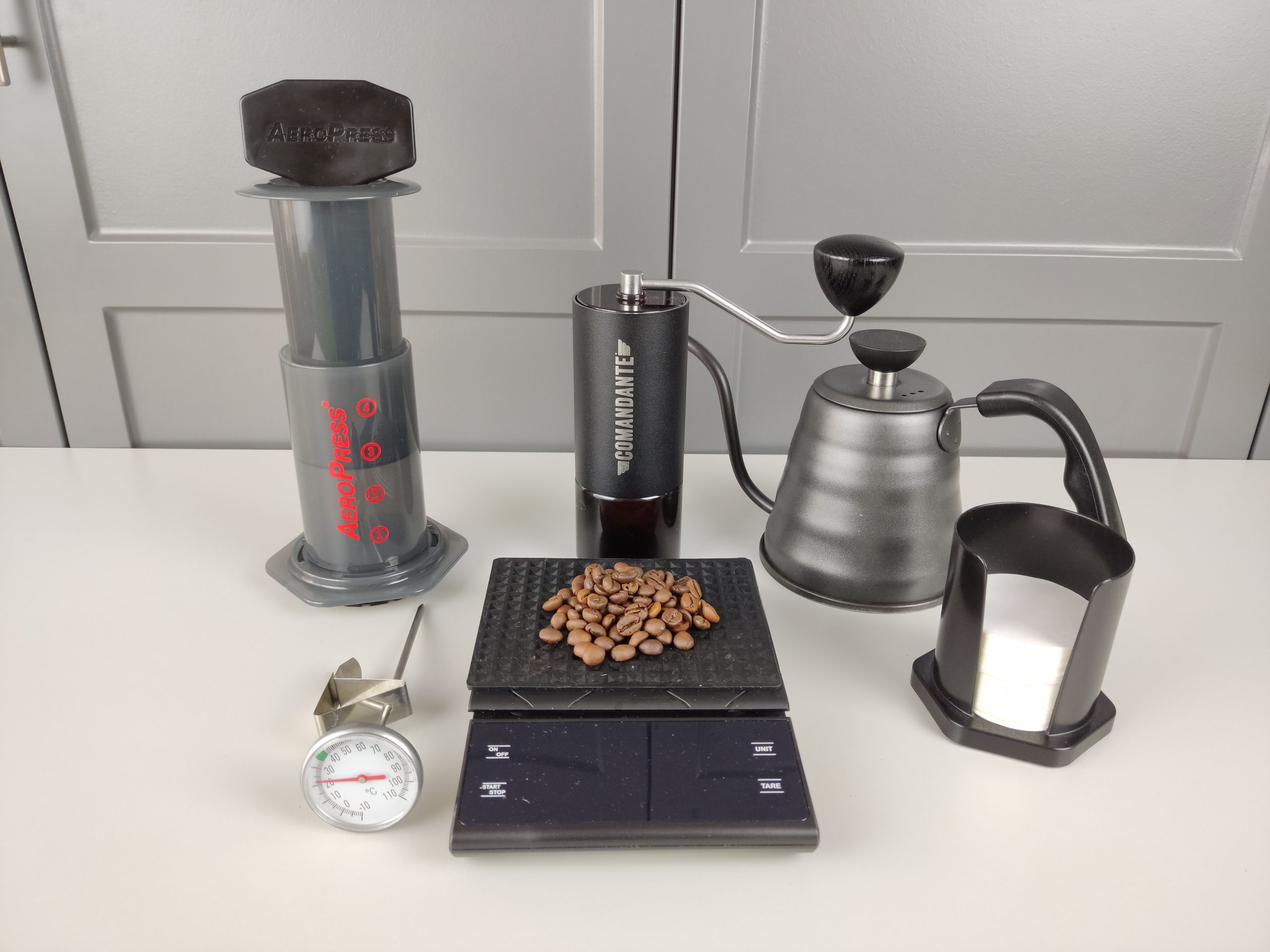
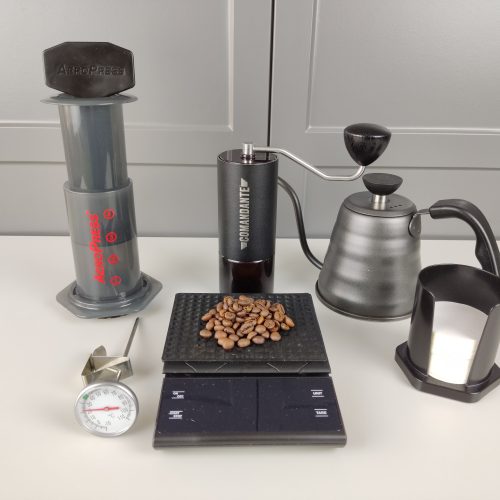
- Aeropress coffee maker
- Paper or metal filter
- Aeropress paddle
- 15 gr coffee beans
- 75 ml hot water
- Burr Grinder
- Scale
- Thermometer (optional)
Step 1) Grind Your Beans
Grind your coffee beans a bit coarser than an espresso grind. Providing a specific setting is impossible, as every coffee grinder’s grind setting is different. You can aim for a grind as coarse as table salt for a start.

Step 2) Heat the Water
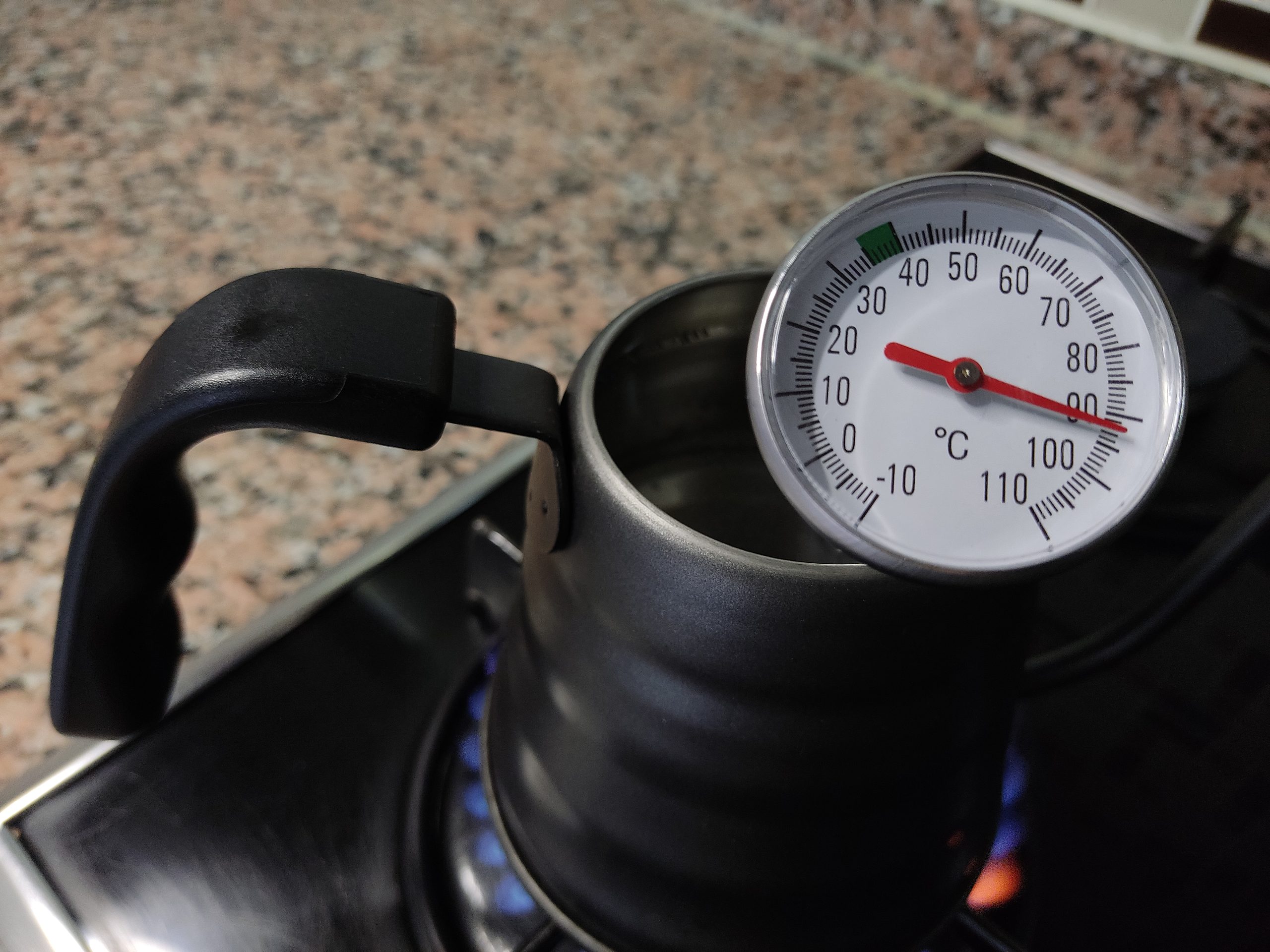
Heat the water to 200 °F (93.5 °C). If you do not have a thermometer, boil the water. Then, let it sit for approximately 1.5 minutes. You will thus achieve an ideal temperature for brewing.
Step 3) Preheat and Prepare Aeropress
Note: As previously mentioned, espresso prepared with Aeropress is more concentrated than regular brewing. This means less water will be used for brewing. Therefore, using the inverted method instead of standard brewing would be more appropriate. This way, water will not start flowing into the cup too early as in the common Aeropress method, and we can use the brewing water more efficiently.
Pull the plunger of the Aeropress out so that 1 cm (½ inch) remains inside the chamber. Then pour hot water into the Aeropress to preheat and shake it gently. Then pour the water inside and place it upside down on the counter.
Pro tip: Using a metal filter for Aeropress will bring you a step closer to real espresso. Because paper filters filter out coffee oils, thus producing a cup of coffee with a lower body.
On the other hand, metal filters allow some coffee grounds and coffee oils to pass. As a result, you get a stronger cup of coffee with more body.

Step 4) Brew Your Espresso
Place your Aeropress upside down on your scale. Add the coffee grounds first, then tap your scale and hot water.
Note: Espresso is typically brewed at a coffee-to-water ratio of 1:3 and 1:6. You should use 3-6 units of water for every 1 unit of coffee grounds.
To give an example of this brewing, I performed the brewing at a 1:5 coffee-to-water ratio. I used 75 ml (2.5 fl oz) of hot water for 15 grams (0.5 oz) of coffee grounds.
Step 5) Stir and Wait
Stir the mixture with the paddle of your Aeropress for 10 seconds quickly. Then mount the filter cap and wait for your coffee to brew for 1 minute.
Step 6) Flip and Press
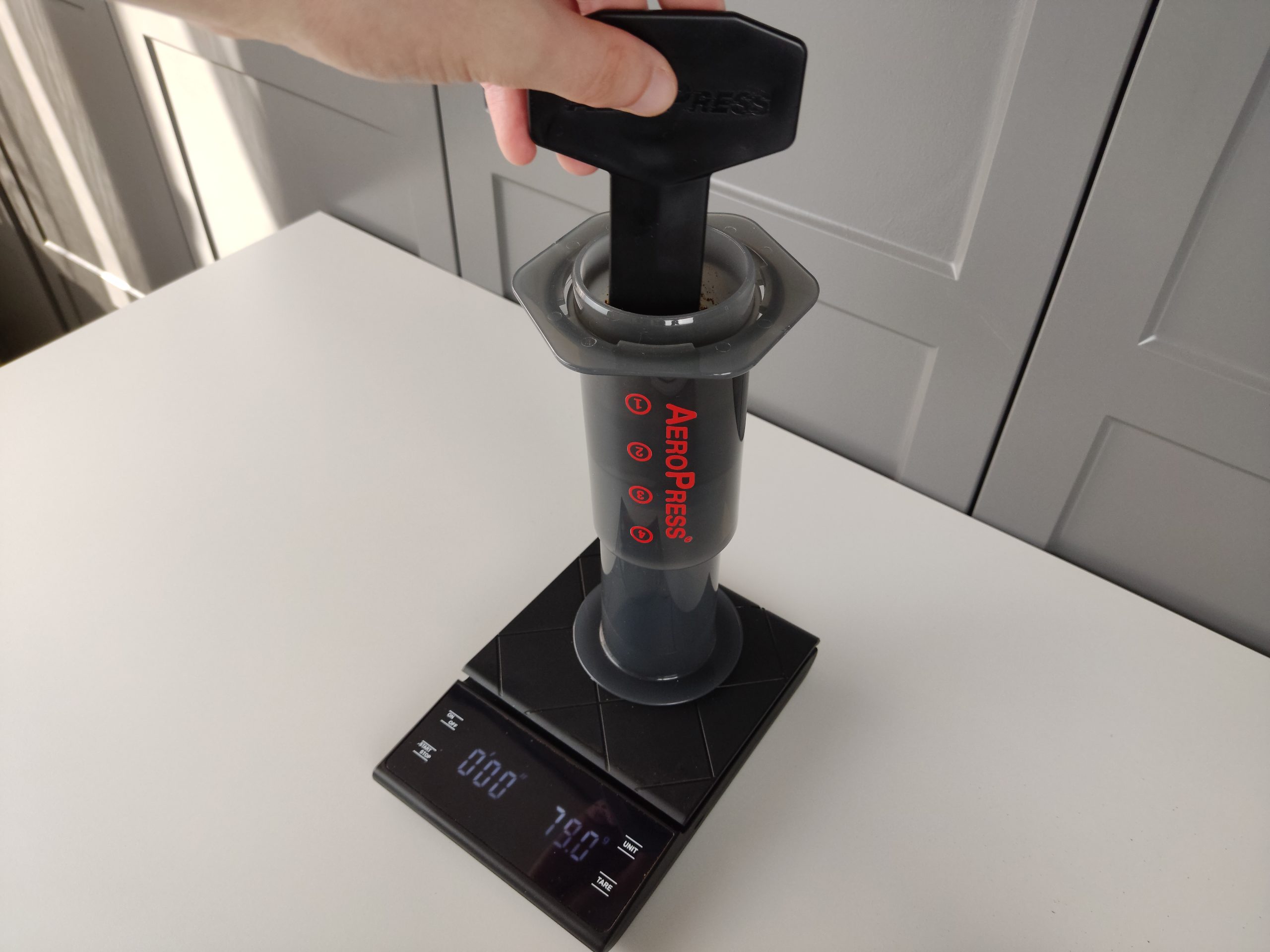
Place your cup upside down over the filter cup of your Aeropress. Then, holding the joint of your Aeropress with one hand and your cup with the other, turn it carefully and quickly, and place it on the counter. Finally, press the plunger steadily without applying too much force. Keep pushing until you hear the hissing sound.
When you hear the sound, your coffee is ready to serve.
Pro tip: The funnel that comes with your Aeropress fits perfectly into the end of the Aeropress. If you don’t have a cup that fits the width of the filter cap, you can use this funnel to use narrower cups.


Conclusion for Aeropress Espresso
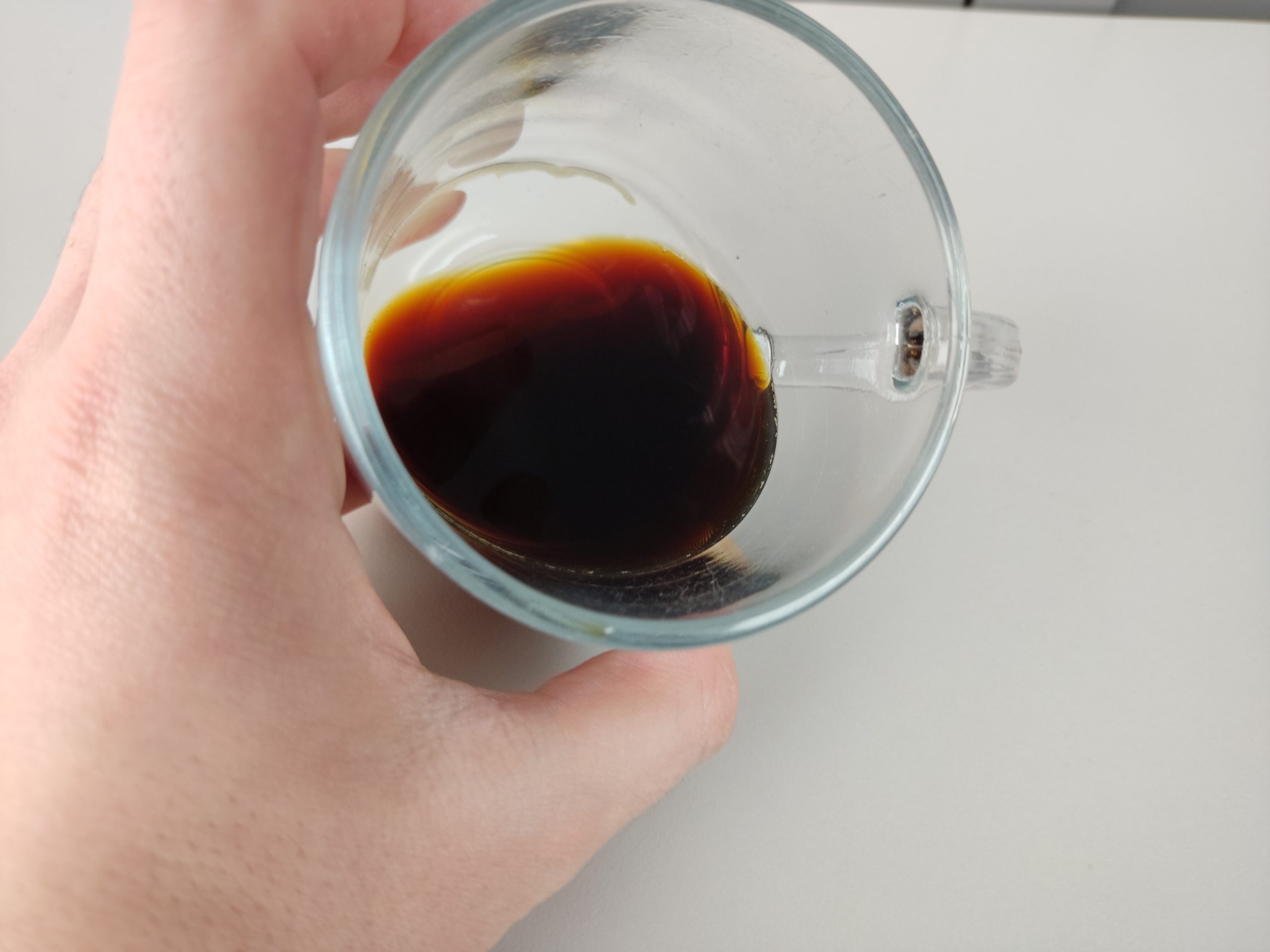
You can easily brew an espresso-like coffee at home using an Aeropress. This equipment will also last you a long time in your espresso-based coffee recipes before you.
Related Recipes
Making Espresso with Aeropress

Equipment
- 1 Aeropress paddle
- 1 Burr Grinder
- 1 Scale
- 1 Thermometer (optional)
Ingredients
- 15 gr Coffee Beans
- 75 ml Hot Water
Instructions
- Grind Your BeansGrind your coffee beans a bit coarser than an espresso grind. Providing a specific setting is impossible, as every coffee grinder’s grind setting is different. You can aim for a grind as coarse as table salt for a start.
- Heat the WaterHeat the water to 200 °F (93.5 °C). If you do not have a thermometer, boil the water. Then, let it sit for approximately 1.5 minutes. You will thus achieve an ideal temperature for brewing.
- Preheat and Prepare AeropressPull the plunger of the Aeropress out so that 1 cm (½ inch) remains inside the chamber. Then pour hot water into the Aeropress to preheat and shake it gently. Then pour the water inside and place it upside down on the counter.
- Brew Your EspressoPlace your Aeropress upside down on your scale. Add the coffee grounds first, then tap your scale and hot water.
- Stir and WaitStir the mixture with the paddle of your Aeropress for 10 seconds quickly. Then mount the filter cap and wait for your coffee to brew for 1 minute.
- Flip and PressPlace your cup upside down over the filter cup of your Aeropress. Then, holding the joint of your Aeropress with one hand and your cup with the other, turn it carefully and quickly, and place it on the counter. Finally, press the plunger steadily without applying too much force. Keep pushing until you hear the hissing sound.When you hear the sound, your coffee is ready to serve.