

Last Updated on February 19, 2024 by Ibrahim Bat
Turkish coffee holds a special place in the world of coffee with its distinctive taste and brewing ritual. Turkish coffee has a thick texture, a strong taste, and a thick layer of foam. Therefore, its flavor lingers on the palate for a long time.
On the other hand, Turkish coffee is an unfiltered beverage prepared in a cezve (a type of pot used to make Turkish coffee) using extra fine ground coffee beans (even finer than espresso). For this reason, a thick layer of coffee grounds forms at the bottom of your cup.
In this article from Best Coffee at Home, I will touch on the key points of making Turkish coffee at home.
First of all, no filter is used in Turkish coffee. However, the fact that Turkish coffee is unfiltered does not cause any problems. Because Turkish coffee is ground to the fineness of powdered sugar, referred to as extra fine, such fine grinding means coffee grounds that are so fine they won’t be noticed during consumption.
Related: We Found Best Turkish Coffee Brands!
What Do You Need for Homemade Turkish Coffee?
- Cezve
- Small Cup
- Spoon
- Coffee
- Water
- Sugar (optional)
Note: You will need a coffee grinder if you don’t want to use pre-ground coffee.

Related: Best Decaf Turkish Coffee Brands
How to Make Turkish Coffee at Home? Step By Step Guide
Making Turkish coffee consists of very simple and easy steps. It doesn’t require superior barista skills. You can easily do it in a few steps.
Step 1) Add Water And Coffee
The coffee-water ratio frequently used for Turkish coffee is 1:10. For every 1 unit of coffee grounds, 10 units of water should be used. For example, for a 60 ml (2 fl oz) brew, you should use 6 grams (0.2 oz) of coffee grounds.
Turkish coffee is usually served in 60 ml (2 fl oz) cups. This quantity is approximately the size of a double espresso. If you are preparing coffee for more than one person, you can increase the amount of water and coffee you use by this ratio.
Add coffee and water to the cezve. If you like your coffee sweet, you can also add sugar. You can use pre-ground coffee for Turkish coffee, or if you have a suitable coffee grinder, you can grind it at home. The ideal grind size for Turkish coffee is extra fine.

Step 2) Stir and Boil
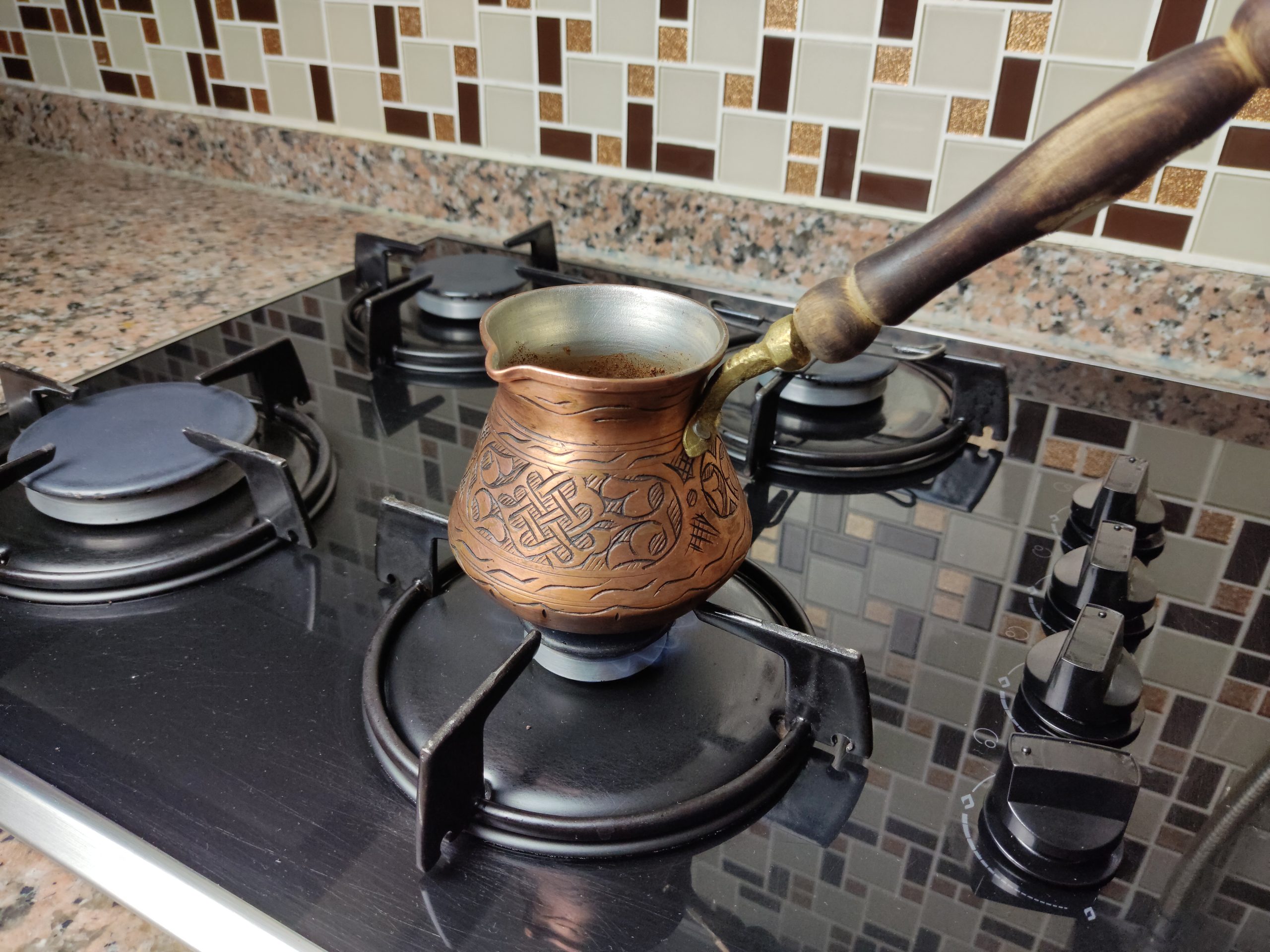
Use a spoon to blend the coffee and water. Then set the stove to medium and place the cezve on it.
When a foam layer begins to rise, turn off the heat source.
Tips: After you place the cezve on the stove, never stir it again or interfere with it in any other way. Otherwise, you will destroy the foam that begins to form on your coffee. And if you destroy the foam, you break the rules of this ancient coffee technique that has been ongoing for centuries.
Step 3) Serve
Serve the coffee in cups. If you’re brewing for more than one person, first distribute the foam into the cups and then fill them up. Remember, Turkish coffee without foam is unthinkable.
Note: Turkish coffee is quite hot when it’s ready to serve. It’s not suitable to drink all at once, like espresso. Wait 1-2 minutes for the temperature of the Turkish coffee to drop a bit before drinking. And take your coffee in small sips.
Note 2: The thick layer of coffee grounds that forms at the bottom of the cup is not drunk. The thick coffee grounds at the bottom of Turkish coffee are called “telve.”

Related: Coffee Market in Turkey
Serving Tips For Turkish Coffee
Cup
Use a handled espresso cup if you’re having trouble finding a cup specially made for Turkish coffee. Actually, they are completely the same thing. I often use my espresso cups for Turkish coffee and my Turkish coffee cups for espresso.
Water
Turkish coffee is always served with a glass of water. Because a sip of water is drunk before the coffee cleanses the palate, thus, the taste of the coffee can be felt more clearly.
Dessert
You can serve Turkish Delight (especially double-roasted Turkish Delight) or chocolate with Turkish coffee. Both are in beautiful harmony with Turkish coffee.
Conclusion for Homemade Turkish Coffee
Turkish coffee is a very important beverage in Turkish culture. It has a history of over 500 years and a deep culture behind this history.
If you have never tried it before, I definitely recommend you to try it. It may challenge you at your first sip, but I’m sure it will become a coffee you can’t give up after a few attempts.

Turkish Coffee Recipe

Equipment
- 1 Turkish Coffee Pot (Cezve)
Ingredients
- 6 gr Finely Ground Turkish Coffee
- 1 Cup Cold Water
- 1 tea spoon Sugar (optional)
Instructions
- Add Water And CoffeeThe coffee-water ratio frequently used for Turkish coffee is 1:10. For every 1 unit of coffee grounds, 10 units of water should be used. For example, for a 60 ml (2 fl oz) brew, you should use 6 grams (0.2 oz) of coffee grounds. Add coffee and water to the cezve. If you like your coffee sweet, you can also add sugar.
- Stir and BoilUse a spoon to blend the coffee and water. Then set the stove to medium and place the cezve on it. When a foam layer begins to rise, turn off the heat source.
- Serve Serve the coffee in cups. If you’re brewing for more than one person, first distribute the foam into the cups and then fill them up. Remember, Turkish coffee without foam is unthinkable.












1 thought on “How to Make Turkish Coffee?”
I love Turkish coffee. thanks for recipe.