


Last Updated on January 25, 2024 by Ibrahim Bat
What is Honey Processed Coffee?
“The Honey Process” is a method that acts as a bridge between the natural and washed methods. In the honey process, the coffee cherries are de-pulped (the skin and pulp are removed), but some mucilage (the sticky substance surrounding the coffee bean) is left on. The coffee beans are then dried with the mucilage on, which gives them a sweet and honey-like flavor.
Steps of Honey Process Method

Picking and Sorting Cherries
First, people pick coffee cherries and sort them. This is a common step with other processing methods as well.
Depulping
In this step, a “depulper” is used to remove the outer skin of the coffee cherries to get to the coffee beans inside. It’s like peeling an orange to get to the fruit inside but done with a machine. In the Honey Process, after de-pulping, a sticky covering called mucilage is left on the beans, which is not all washed off as it would be in other coffee processing methods. This mucilage, when dried on the beans, gives the coffee a sweet flavor.
Keeping Some Mucilage
In the Honey Process, after the outer skin of the coffee cherries is removed (depulping), there is a sticky substance called mucilage left on the coffee beans.
The amount of mucilage left on the beans can affect the flavor of the coffee. Some coffee beans may have more mucilage left on, and others less, leading to different tastes and coffee types like Black, Red, or Yellow Honey coffee.
Drying
Next, the beans are dried under the sun with the mucilage still on them. The mucilage makes the beans taste sweet and fruity, called the Honey Process.
More Processing
After drying, the beans might be milled and go through other steps before they can be roasted.
Related: Mountain Water Decaf Process
What are the different types of honey process?
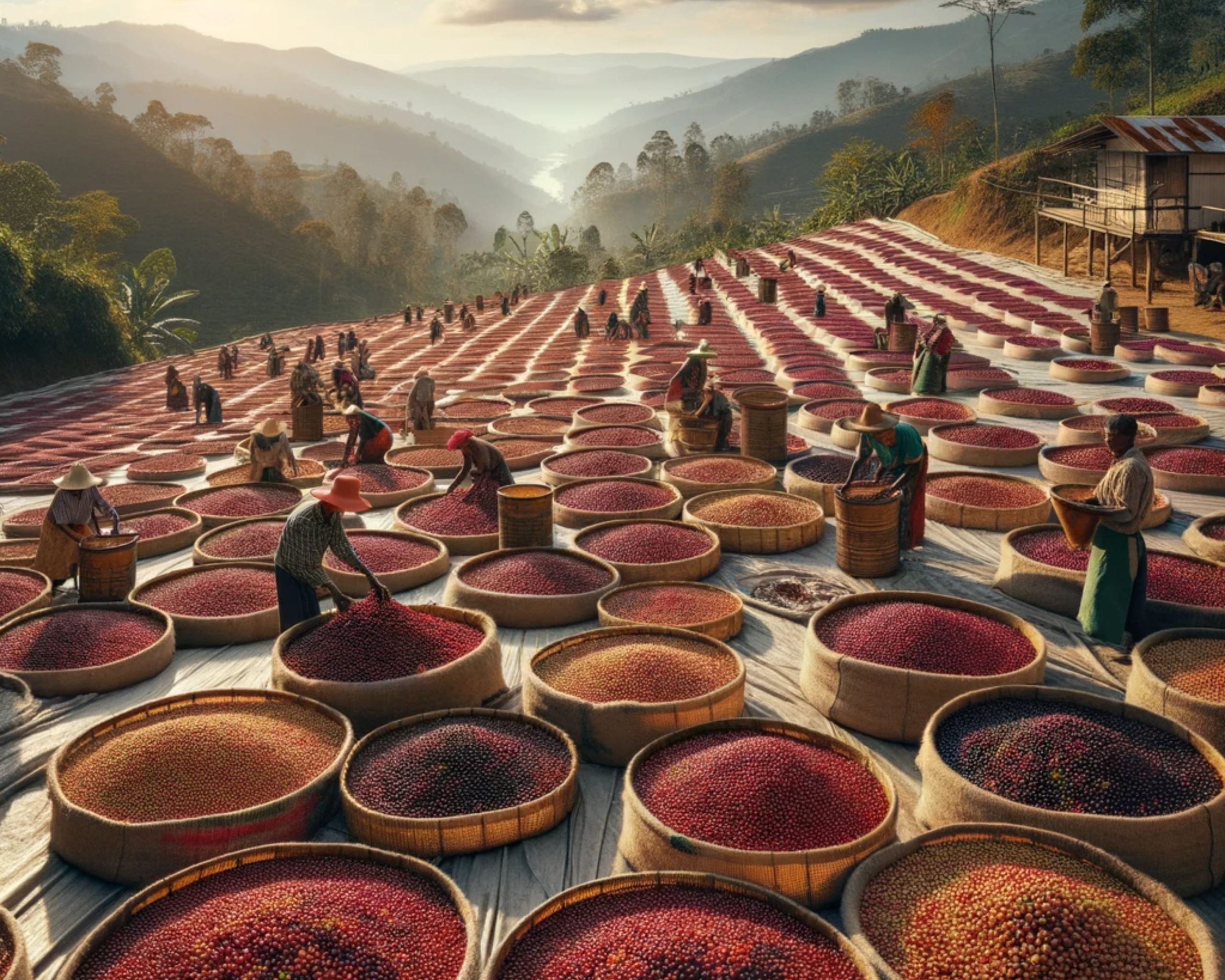
There are three main processing methods commonly preferred in coffee production worldwide: natural, washed, and honey methods. Each goes through different processes that significantly affect the aroma, taste, and overall character of the coffee.
White Honey
- Mucilage Removal: 90-100%
- Drying Process: Dries uncovered.
- Flavor Profile: Results in a clean and balanced cup of coffee.
Yellow Honey
- Mucilage Removal: Up to 50%
- Drying Process: Dries uncovered.
- Flavor Profile: Produces a cup with floral notes and hints of apricot.
Red Honey
- Mucilage Removal: 20-25%
- Drying Process: Dries uncovered.
- Flavor Profile: Results in a sweet and syrupy cup of coffee.
Black Honey
- Mucilage Removal: Little to no mucilage is removed after pulping.
- Drying Process: The coffee beans are usually dried with almost all the mucilage attached. This process often takes place in a shaded environment to slow the drying process, which can lead to a partial fermentation of the mucilage. This extended drying time, combined with the mucilage left on the bean, contributes to the developing of complex flavors.
- Flavor Profile: Black honey processed coffees are often characterized by their full body, high sweetness, and complex, fruity flavors. The mucilage fermenting accentuates the fruity depth and sweetness during the drying process.

| White Honey | Yellow Honey | Black Honey | |
|---|---|---|---|
| Mucilage Removal | 90-100% removed | Up to 50% removed | Little to no mucilage removed |
| Drying Process | Dries uncovered, usually in the sun | Dries uncovered, usually in the sun | Often dries covered or shaded, slower drying process |
| Drying Duration | Shorter drying time | Moderate drying time | Longer drying time |
| Flavor Profile | Clean, balanced, possibly brighter | Floral, fruity notes, balanced | Sweet, full-bodied, complex, fruity depth |
| Body | Lighter to medium | Medium | Full |
| Sweetness | Moderate | High | Very high |
| Acidity | Higher | Moderate to high | Lower to moderate |
| Complexity | Lower | Moderate | High |
How much mucilage is left on the beans in the Honey Process?

Honey Process (Pulped Natural) vs. Natural Process (Dry) vs Washed Process (Wet)
The Washed Process involves de-pulping and fermentation, yielding a clean, bright, fruity flavor, but is costly and water-intensive, commonly used in Central and South America and East Africa.
The Natural Process dries whole cherries in the sun, resulting in a full-bodied, fruity flavor, is less costly with lower water usage and is prevalent in water-scarce regions like Ethiopia.
The Honey Process is a hybrid, retaining some mucilage during drying, giving a full-bodied, sweet, and bright flavor. It requires high skill, is often expensive, and its geographical preference varies based on producer and market demands.
| Washed Process | Natural Process | Honey Process | |
| Methodology | De-pulping to remove mucilage. | Drying whole cherries in the sun. | De-pulping with partial mucilage retention. |
| Flavor Profile | Clean, bright, fruity, and acidic. | Full-bodied, smooth, complex fruity notes. | Full body with bright, well-rounded acidic notes, sweet. |
| Cost & Skill | Higher cost due to equipment and water use. | Less equipment, higher spoilage risk. | High skill, labor-intensive, often most expensive. |
| Environmental Impact | High water usage, wastewater generation. | Lower water usage, suitable for arid regions. | Lesser water usage than washed, eco-friendlier. |
| Drying Method | Sun drying on beds/patios or mechanical drying in humid areas. | Sun drying with regular turning to prevent spoilage. | Drying with mucilage, requires careful management to prevent spoilage. |
| Geographical Preference | Common in Central and South America, and East Africa. | Prevalent in Ethiopia and parts of South America. | Variable, dependent on producer preference and market demand. |
You may also be interested:












1 thought on “Understanding White, Yellow, Red & Black Honey Processed Coffee!”
fantastic issues altogether, you simply received a new reader.