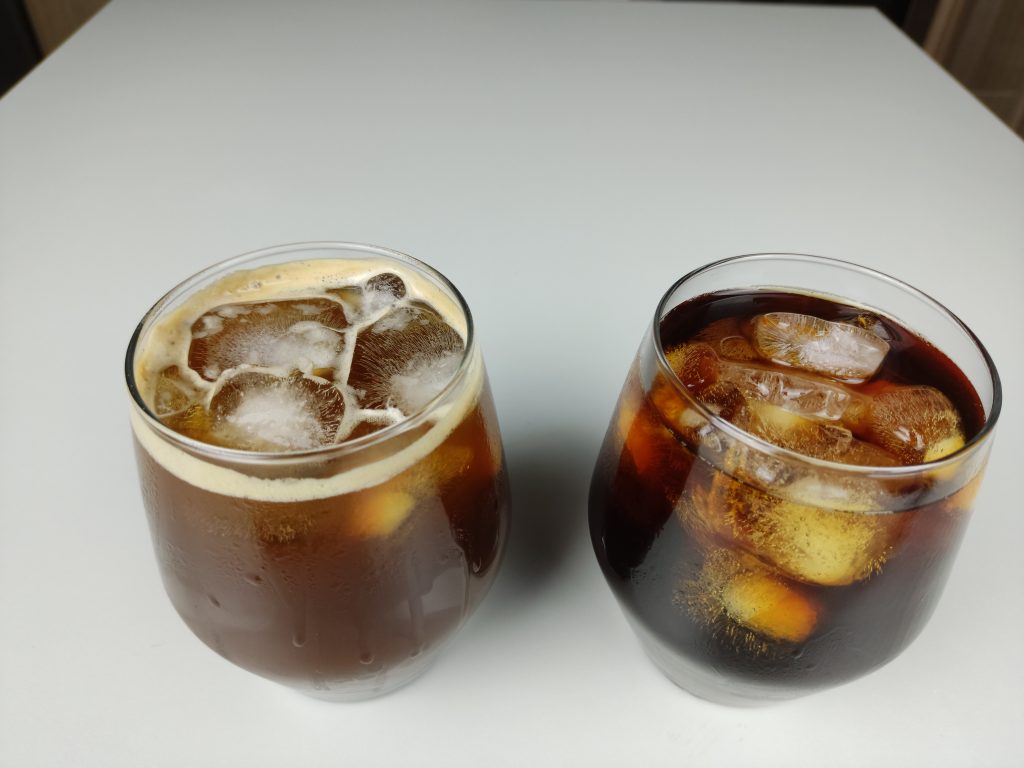


Last Updated on January 31, 2024 by Ibrahim Bat
The French Press is the best way to make coffee to get the most out of your coffee’s unique taste and smell. It’s second only to the cupping method. Cupping is for tasting and checking coffee quality, not for everyday drinking.
So, for daily use, the French Press is the top choice to discover coffee’s flavor secrets.
However, making filter coffee in a French Press might look easy, and it is, but there are some small things to watch out for. Your coffee can turn out bitter, sour, or gritty if you’re not careful.
We’ve made this guide to help you always make a perfect cup of filter coffee with your French Press. Just follow a few simple steps, and you’ll enjoy the ideal cup you want.
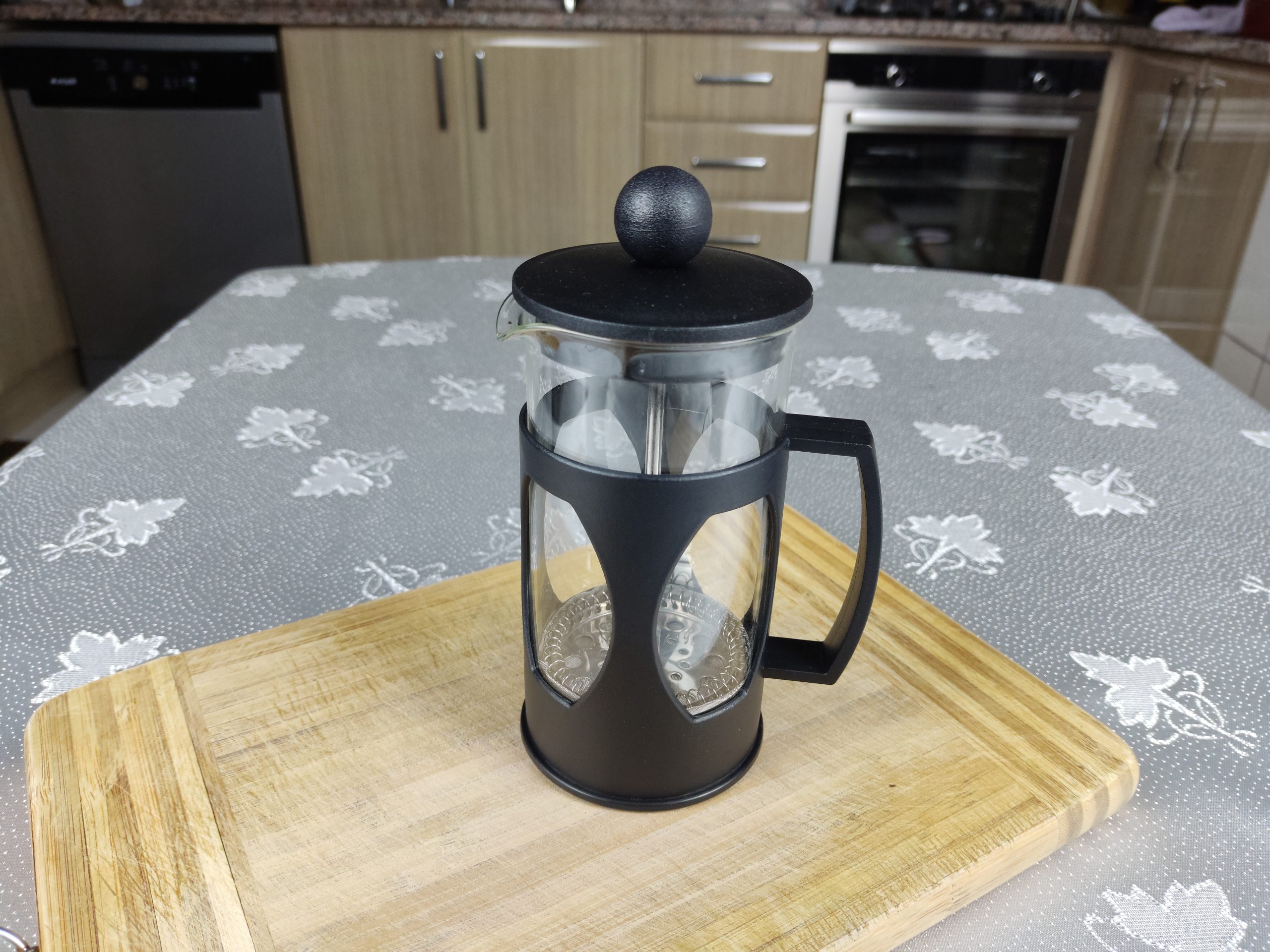
What is a French Press?
The French press, a cafetière, coffee plunger, or press pot, steers coarse coffee grounds and hot water together, then presses the mixture through a metal filter to extract the liquid. In this way, a more uniform extraction is achieved.
The French press is a popular brewing method due to its ease of use and ability to control the brewing process easily. This method can obtain filtered coffee with a strong and rich taste.
How to Use a French Press?
The French press is an easy-to-use and relatively quick brewing method. You can prepare your filter coffee at home with a French press in 8 simple steps.
Step 1: Choose Your Ratio
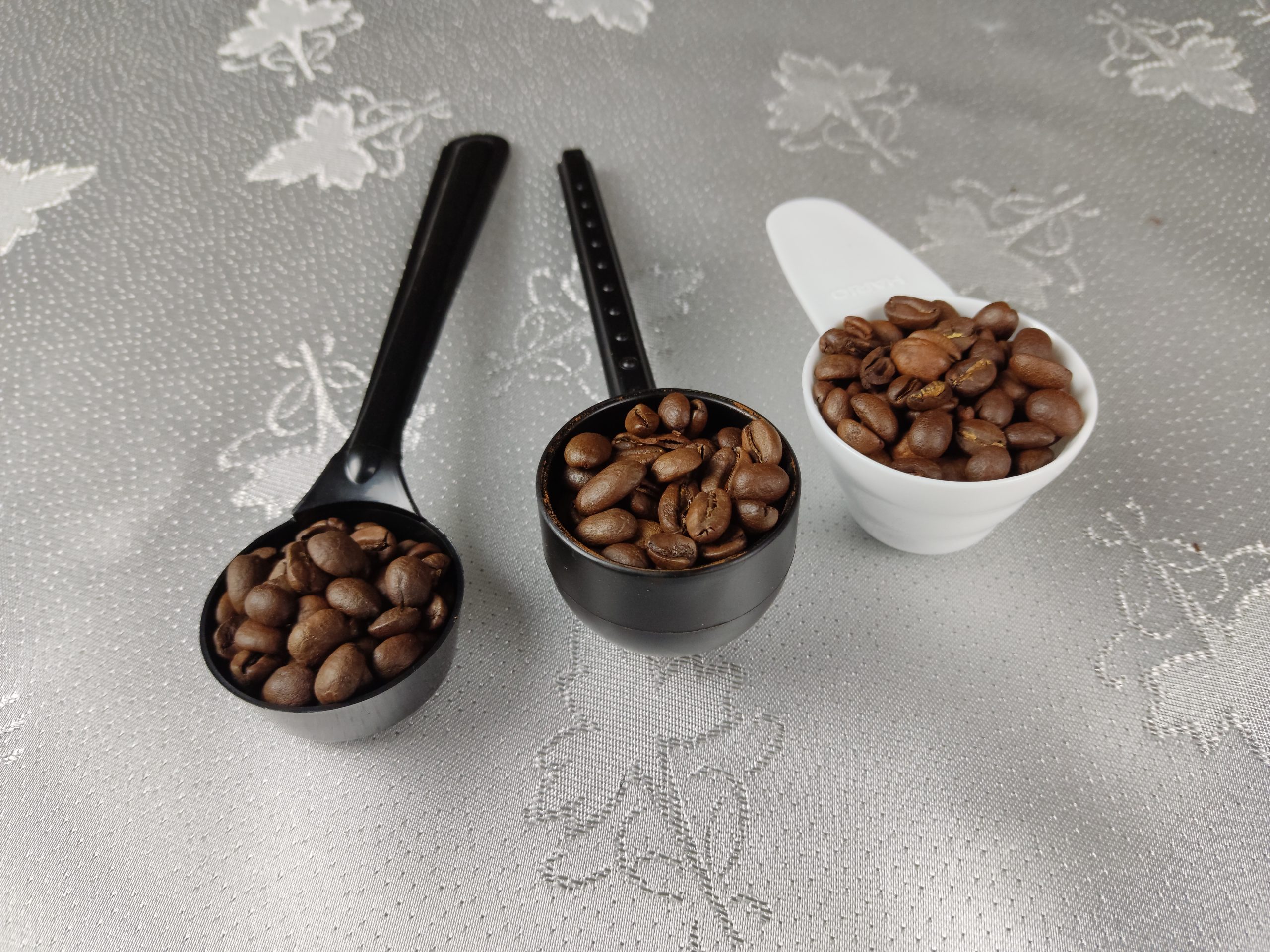
You can use a coffee-to-water ratio between 1/12 and 1/18 for the French press. Which range you choose within this interval depends on how strong a coffee you want. For a stronger coffee, lean towards 1/12; for a softer brew, approach 1/18.
These ratios indicate how many water units you will use per unit of coffee. You can find the amount of coffee corresponding to the amount you want to brew in the table below.
Imperial System
| Quantity | Weak (1/18) | Suggested (1/16) | Strong (1/12) |
|---|---|---|---|
| 1 Cup (8 oz) | 0.45 oz | 0.50 oz | 0.67 oz |
| 2 Cups (16 oz) | 0.90 oz | 1 oz | 1.33 oz |
| 4 Cups (32 oz) | 1.80 oz | 2 oz | 2.67 oz |
Metric System
| Quantity | Weak (1/18) | Suggested (1/16) | Strong (1/12) |
|---|---|---|---|
| 1 Cup (240 ml) | 13.3 gr | 15 gr | 20 gr |
| 2 Cups (480 ml) | 26.6 gr | 30 gr | 40 gr |
| 4 Cups (960 ml) | 53.2 gr | 60 gr | 80 gr |
I am using a ratio of 1/16 for the French press. This ratio is a good starting point.
Step 2: Boil the Water
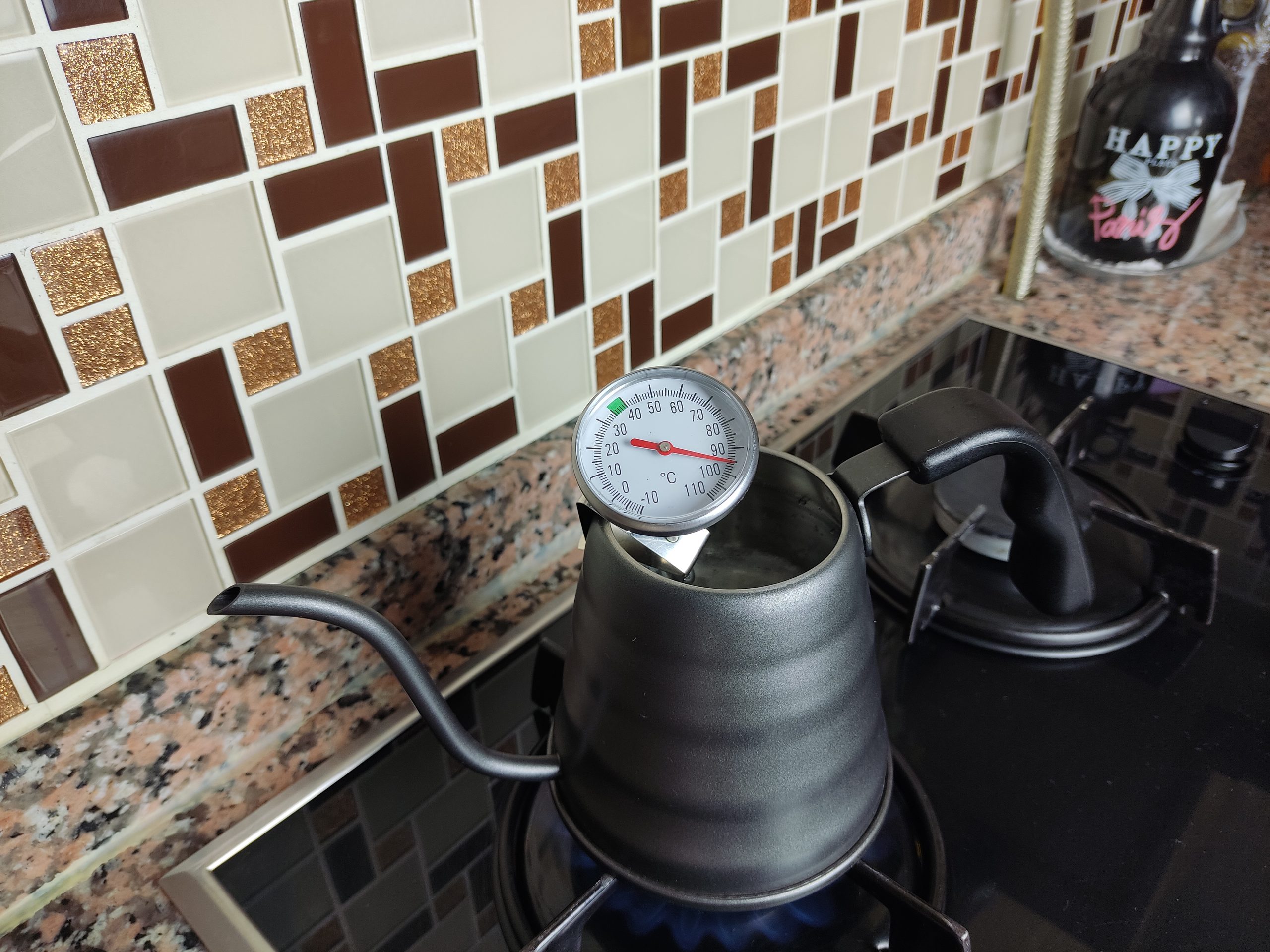
Place your water on the heat source to boil. For a better coffee experience, use bottled water or distilled water. It is not mandatory but will take your coffee experience to the next level. I use a reverse osmosis water purifier in my brews for maximum filtration. The ideal brewing temperature for a French press is just below the boiling point.
If you have a thermometer that can be used in foods, aim for a range between 185-203 °F (85-95 °C). Otherwise, it’s not a problem. Boil the water until it bubbles, turn off the heat source after boiling, and wait 1-1.5 minutes. The water will reach the ideal temperature for brewing.
Step 3: Pre-Heat Your French Press and Mug
To better preserve the heat in your French press during brewing and for a hotter cup of coffee, pre-heat your French press.
All you need to do is add hot water to your French press, give it a light swirl, and then pour the water.

Step 4: Grind Your Coffee
Grind your coffee before brewing for a rich aroma and a better coffee experience.
For the French press, you can grind your coffee in the medium-coarse to coarse range.

Step 5: Mix Your Ground Coffee and Water
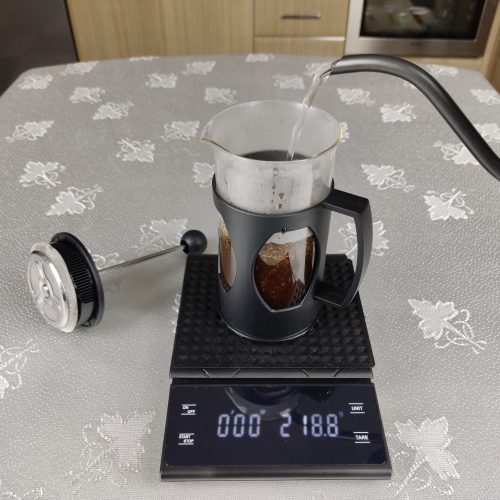
Place your French press on the scale and pour the coffee grounds into the French press. Then, add the water all at once. Using a scale is optional but will help you follow the recipe more accurately.

Step 6: Wait for It to Brew
Close the lid of your French press and leave your coffee to brew for 4-5 minutes.
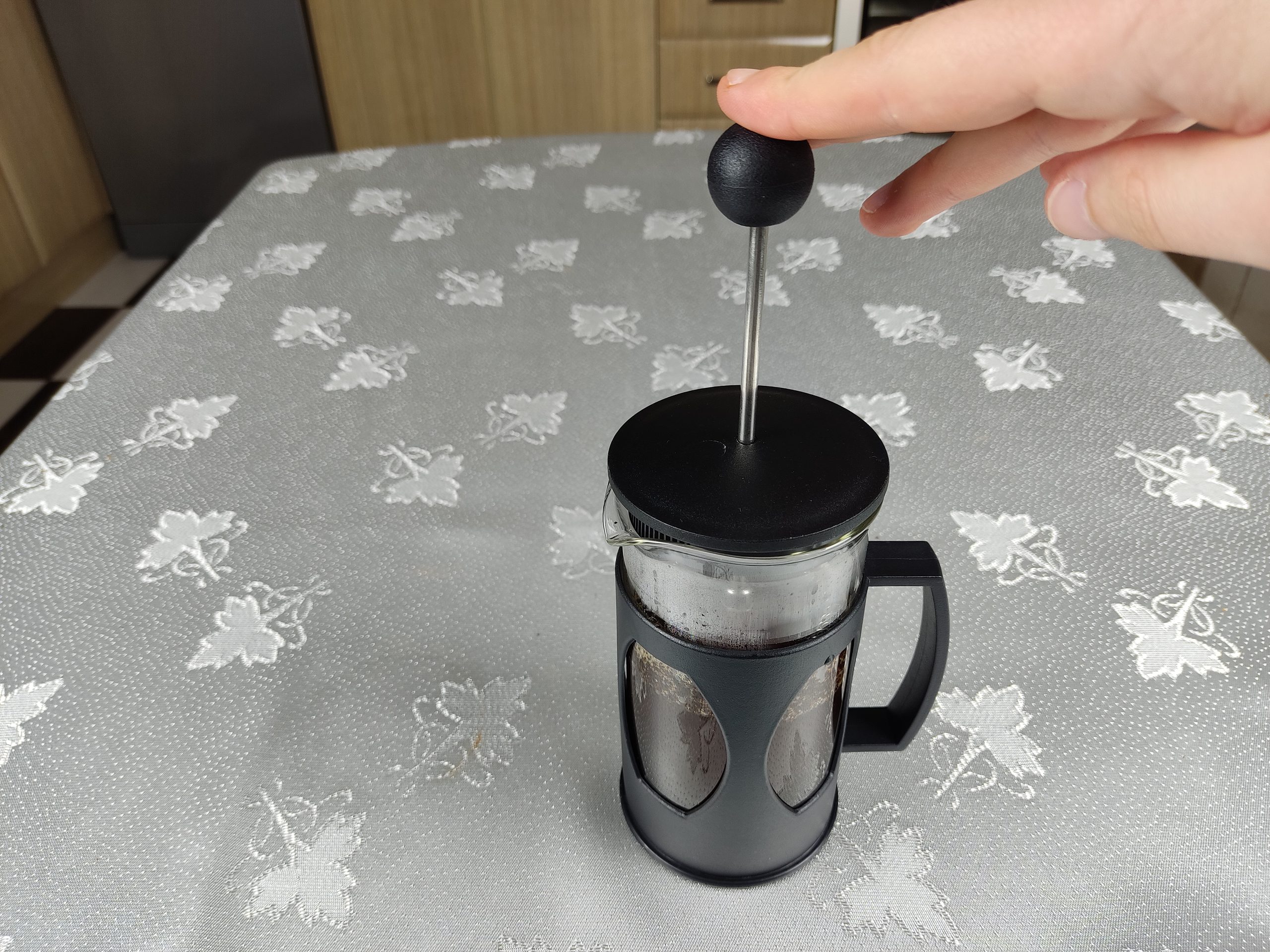
Step 7: Slowly Press the Plunger Down
Gently press down on the press mechanism. Do not rush this process. Pressing down quickly will stir up the grounds at the bottom, causing unwanted sediment in your cup.
Pro Tips: You do not have to press the mechanism down. You can stop just above the surface of the coffee to prevent stirring up the sediment at the bottom.
Step 8: Pour Your Coffee into Your Cup
After the brewing stage, pour your coffee from the French press into your cup without delay.
Leaving your coffee in your French press will cause over-extraction, making your coffee taste more bitter and harsh.
All the steps are complete. Now you can enjoy your coffee.

Finally, do not forget to clean your French press. Cleaning and maintaining a French press is easy, but there are a few important points to consider.
Read our article “Effortless French Press Cleaning: Step-by-Step Instructions” for more effective, deep, and hassle-free cleaning.
You can read our articles below to learn about the differences between the French press brewing and filtered coffee methods.
What coffee is best for French Press?
Generally, medium to dark roast coffees are well-suited for the French press. However, I highly recommend giving light roast coffees a try as well.
Why is my French Press coffee bitter?
The main reason for this is over-extraction, meaning more coffee is being dissolved in the water than it should be. To prevent this, you can try the following steps. However, to identify the source of the problem, make changes to only one variable at a time.
- Reduce your brewing time, but do not go below 4 minutes.
- Your grind size might be finer than it should be. Try coarser grinds.
- Lower your water temperature, but do not exceed 176 °F (80 °C).
- Prefer lighter-roasted coffee beans. Dark roasted coffee beans have more bitter flavors.
French Press Recipe

Equipment
- 1 French Press
- 1 Scale
- 1 Thermometer (optional)
Ingredients
- 15 g Coffee
- 240 ml (8 fl oz) Hot Water
Instructions
- Choose Your Coffee to Water RatioThe commonly recommended ratio for brewing coffee in a French press is 1:16. If you're brewing for the first time, this ratio should work well for you. Later on, you can make adjustments to the ratio based on your taste preferences."
- Boil the WaterHeat a portion of water, taking into account the water you'll use for preheating. If you have a food thermometer, aim for 185-203 °F (85-95 °C). If not, boil the water and let it rest for 1-1,5 minute. It will come to the ideal temperature for brewing.
- Pre-Heat Your French Press and MugAdd a bit of hot water to your French press and cup, swirl gently, and then pour it out.
- Grind Your CoffeeFor a better coffee experience, grind your coffee just before brewing. For the French press, you can grind your coffee in the medium-coarse to coarse range.
- Mix Your Ground Coffee and WaterPlace your French press on the scale and pour the coffee grounds into the French press. Then, add the correct ratio of hot water all at once. Using a scale is optional but will help you follow the recipe more accurately.
- Wait for It to BrewClose the lid of the French press and wait for 4-5 minutes for it to steep.
- Slowly Press the Plunger DownPress down the plunger of the French press gently. Take your time, as rushing may cause splattering.
- Pour Your Coffee into Your CupServe and enjoy 🙂