
Last Updated on January 24, 2024 by Ibrahim Bat
Through the Ages: A Look at Cold Brew History

Pre-1600: Cold Brewing Tea Origins

Whispers of cold brew coffee used the “cold extraction” method to extract the essence of tea leaves in Japan centuries before they traveled the world. They used cool river waters to extract the essence of tea leaves. By 1600, the Japanese had mastered this “cold brew tea” technique.
1600s: Introduction of Dutch Coffee Concentrate
In the 1600s, the Dutch, renowned for their advancements in maritime and trade, searched for a coffee brewing method that didn’t involve such a dangerous process as lighting a fire in wooden containers on a ship.
When Dutch traders interacted with the Japanese, the brewed coffee concentrate merged with Japan’s established cold brew production methods, especially those in Kyoto. The Japanese, masters in cold brewing tea, adapted their techniques to coffee, leading to the development of Kyoto-style cold brew coffee, considered one of the oldest forms of cold brew coffee.

This new type of coffee not only facilitated ease in maritime activities but also became a commercial commodity, bottled and sold at various ports, thus spreading the concept of concentrated coffee to different parts of the world.
As a result, the interaction of Dutch traders with Japan played a significant role in shaping global coffee culture by facilitating the exchange of coffee brewing techniques, flavors, and preferences between continents.
Related: Best Cold Brew Coffee Subscription Services Reviewed
A Can of Change: Ueshima Coffee Co.’s Impact on Cold Brew

In 1969, Ueshima Coffee Co. introduced the world’s first canned coffee product, playing a significant role in expanding the horizons of the coffee industry and substantially contributing to the spread of cold brew coffee, especially in Japan. This innovative approach made coffee more accessible and convenient, allowing consumers to enjoy coffee in a new and portable format.
By the 1970s, canned coffee had become a staple product in Japan. The success of canned coffee in Japan encouraged the exploration of different flavors, blends, and coffee products, pushing the boundaries of traditional coffee consumption.
In summary, the launch of canned coffee by Ueshima Coffee Co. in 1969 was a turning point in the coffee industry. This move didn’t just alter what consumers in Japan wanted and how they could get coffee; it also set the stage for cold brew coffee to spread and be accepted worldwide. Additionally, it inspired new ideas and changes in the coffee industry for years.
Todd Simpson’s Toddy: Shaping America’s Cold Brew Journey, 1960s

During his visit to Peru, Todd Simpson encountered cold brew coffee’s unique taste and smoothness. Impressed by its mild taste and low acidity, Simpson invented the Toddy Cold Brew System in 1964. This invention allowed individuals to brew coffee at home using cold water easily.
This invention of Todd’s demonstrated that the cold brew coffee method could be easily made at home. The convenience and user-friendly structure of the Toddy system enabled cold brew coffee to gain interest in American homes.
On the other hand, Simpson’s invention laid the foundation for commercializing cold brewed coffee. Many coffee shops and chains adopted cold brewing as a fundamental product, and some systems reminiscent of Toddy were used.
Brewing Innovation: Blue Bottle’s Cold Brew Impact

Blue Bottle’s introduction of New Orleans-style Cold Brew Iced Coffee to the market in 2014 played an important role in the spread of cold brew coffee and its varieties in America. This coffee, announced by Blue Bottle with the slogan “We found magic,” was an 8-ounce ready-to-drink cold brew.
In 2014, Blue Bottle’s canned cold brew spread to cafes in New York and Whole Foods nationwide. Blue Bottle, known for its high-quality, premium coffee, inspired the coffee industry to experiment with different blends, flavors, and brewing methods by showcasing the potential versatility and adaptability of its New Orleans-style Cold Brew Coffee. This move allowed consumers to enjoy high-quality, comfortable, specialty cold-brewed coffee and further expanded the accessibility of cold-brewed coffee to a wider audience.
Starbucks’s Impact on American Cold Brew Culture
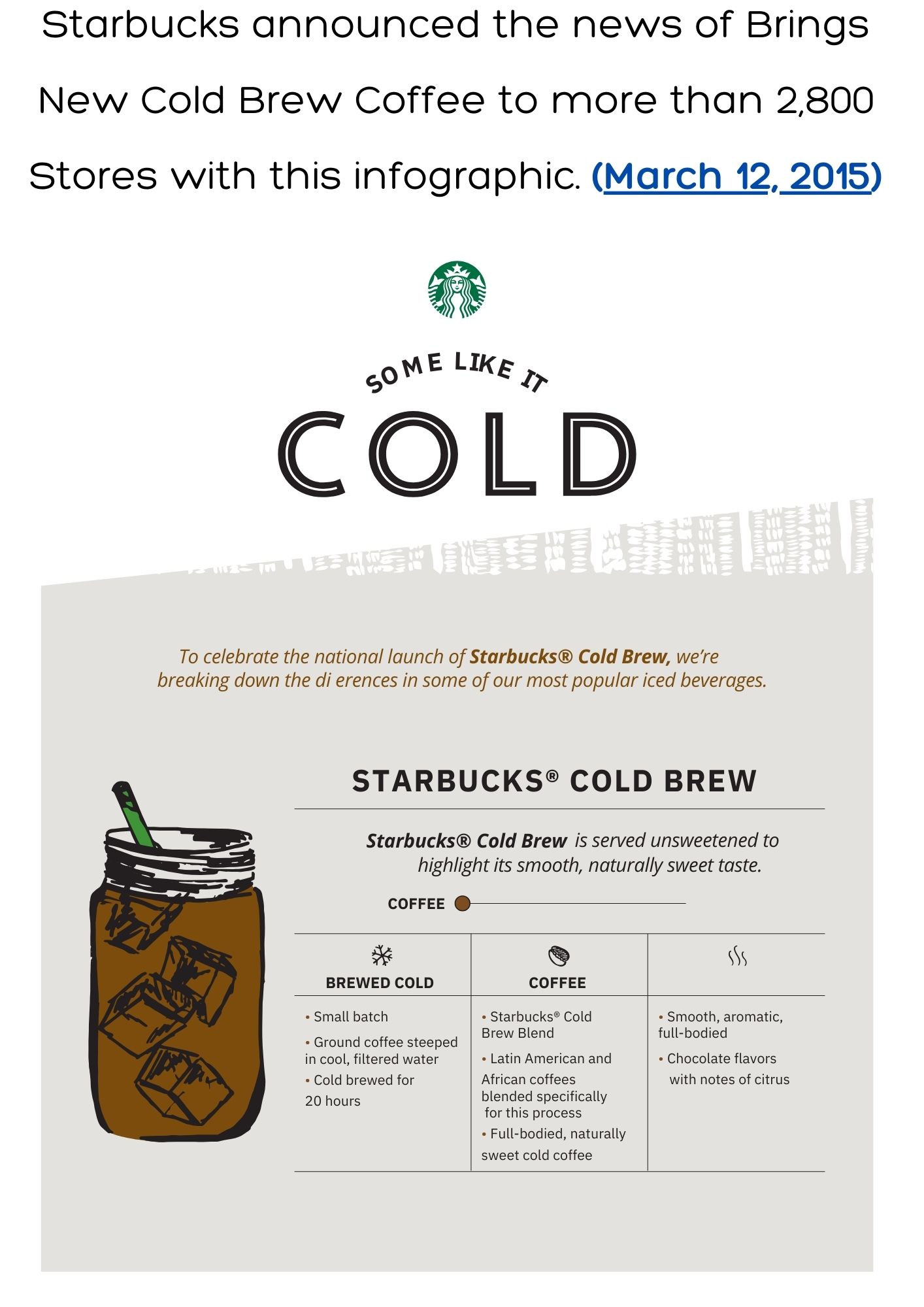
In 2014, Starbucks tested cold brew in San Francisco, Boston, and some locations in Canada. After successful trials, they announced they would start selling Starbucks-style cold brew coffee in more than 2,800 locations on March 31, 2015. Starbucks’ cold brew coffees, which have a naturally sweet, smooth flavor, were quickly adopted by consumers.
In 2016, they changed the name of the cold brew to “Starbucks® Nariño 70 Cold Brew Coffee”. This is because 70% of the coffee beans used in the cold brew were from the Nariño region of Colombia. The remaining 30% of the Nariño 70 Cold Brew was made up of coffee from East Africa.
In summary, Starbucks’ inclusion of cold brew coffee in its menu and its creation of a unique blend combining coffees from Latin America and Africa have undoubtedly played a very important role in making cold brew coffee mainstream. By setting market trends, diversifying offers, and increasing consumer awareness and education, Starbucks has solidified the place of cold brew coffee in the American and global coffee scene.
Dunkin’ Cold Brew came out in 2016

In 2015, Cold brew coffee started being sold in Starbucks locations nationwide. This meant that Starbucks-style cold brew coffee, brewed for 20 hours, would be tasted by tens of thousands of new throats every day. However, more was needed for cold brew to integrate into coffee lovers’ lives deeply.
And in 2016, a new one was added to the retail ambassadors of cold brew: Dunkin’!
In 2016, there were 8,402 Dunkin’ Donuts and Baskin-Robbins combination units in the US. On August 1, 2016, Dunkin’ announced it would start selling cold brew at its locations nationwide. This move would pave the way for cold brew coffee, which has roots in the 1600s, to become one of the most consumed coffees on American soil.
In short, Dunkin’s addition of cold brew coffee to its menu played a significant role in redefining coffee consumption trends in America. Dunkin’s extensive customer base consisting of millions of people had the opportunity to try and adopt this “new” brewing method. As a result, cold brew coffee became mainstream and increased the demand for cold brew coffee by dozens of times. Thus, cold brew coffee started being added to the menus of all coffee chains.
The Future of Cold Brew Coffee
Cold brew, emerging as a novel method of extraction, has successfully secured a position in the market. It experienced a 580% surge in sales within the United States from 2011 to 2016.
- The Global Cold Brew Coffee Market, valued at USD 401.5 million in 2021, is projected to grow to USD 3105.5 million by 2030, with a CAGR of 22.7%.
- Major players like HighBrewCoffee, Kohana Coffee, La Colombe Coffee Roasters, Nestle SA, and Heartland Food Products Group are focusing on developing unusual flavors and expanding their online presence and distribution channels to attract customers and expand their customer base.
- The market is experiencing a trend in nitrogen-filled cold brew coffee products, with producers creating inventive packaging for this high-end coffee beverage.
- Market size value in 2021: USD 401.5 million
- Market size value in 2030: USD 3105.5 million
- Growth Rate: 22.7%
- Base year: 2021
- Forecast period: 2023-2030