
Last Updated on January 27, 2024 by Ibrahim Bat
James Hoffmann is a former World Barista Champion, a YouTuber, an entrepreneur, and an author, who has gained worldwide recognition through his videos on coffee.
In his coffee videos, Hoffmann explains nearly everything in meticulous detail and in a scientific way. One of the topics that Hoffmann carefully covers is the AeroPress.
In his own AeroPress recipe, Hoffmann meticulously describes the use of this coffee maker and has greatly simplified this complex process.
In this guide from Best Coffee at Home, we will closely examine James Hoffmann’s AeroPress recipe.
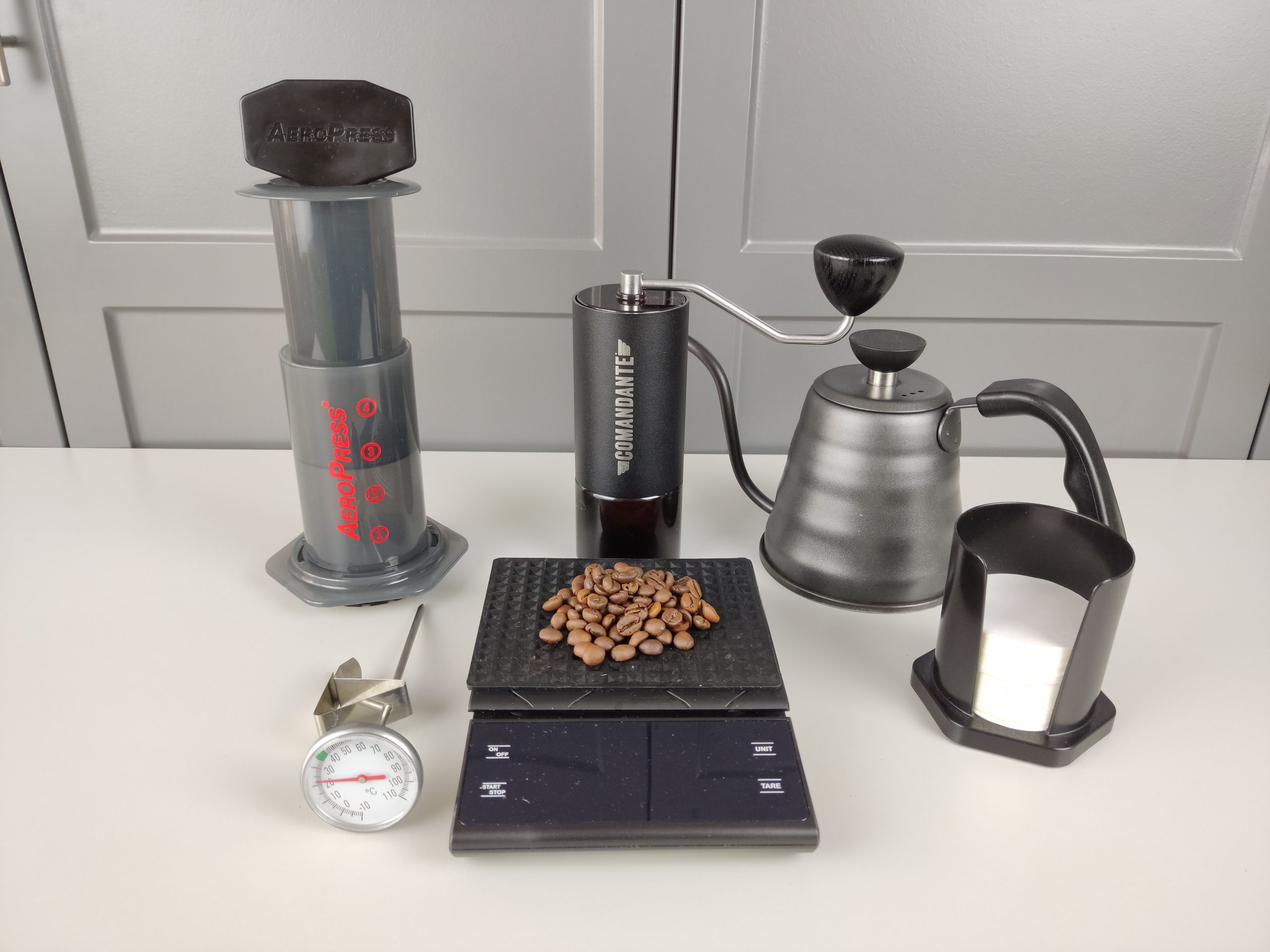
What do You need for the James Hoffmann Style Aeropress?
- Hot water
- Coffee beans
- Aeropress
- Aeropress paper filter
- Grinder
- Scale
- Thermometer
James Hoffmann AeroPress Recipe: Step-by-Step Instruction
In his AeroPress recipe, James Hoffmann prefers the standard method rather than the inverted one. The main issue with the standard method is that the water starts filtering too early. However, this problem is minimized in James Hoffmann’s recipe.
This is because the plunger is inserted and slightly pulled back after pouring the water in the James Hoffmann-style AeroPress recipe. This creates a vacuum inside the AeroPress, which stops the water from dripping through the paper filter.
Also, unlike typical AeroPress recipes, the stirring process is skipped in this recipe. Instead, it is gently swirled for 30 seconds before pushing the plunger.
Preheat
James Hoffmann does not recommend preheating the AeroPress. He bases this on the fact that preheating contributes little heat to the coffee, and the AeroPress has low thermal conductivity.
Rinsing
James Hoffmann views the rinsing of the AeroPress paper filter as an unnecessary step. This is because the paper filter is quite small, so rinsing is unlikely to make a noticeable difference in the taste of your coffee.
Now, let’s take a closer look at James Hoffmann’s recipe. We will cover all the details in the recipe, from how well you should grind your coffee to the water temperature you should use.
Step 1) Prepare Your AeroPress
Place the paper filter in the filter cap of the AeroPress and attach the filter cap to the chamber. Then place the AeroPress on a mug or carafe.

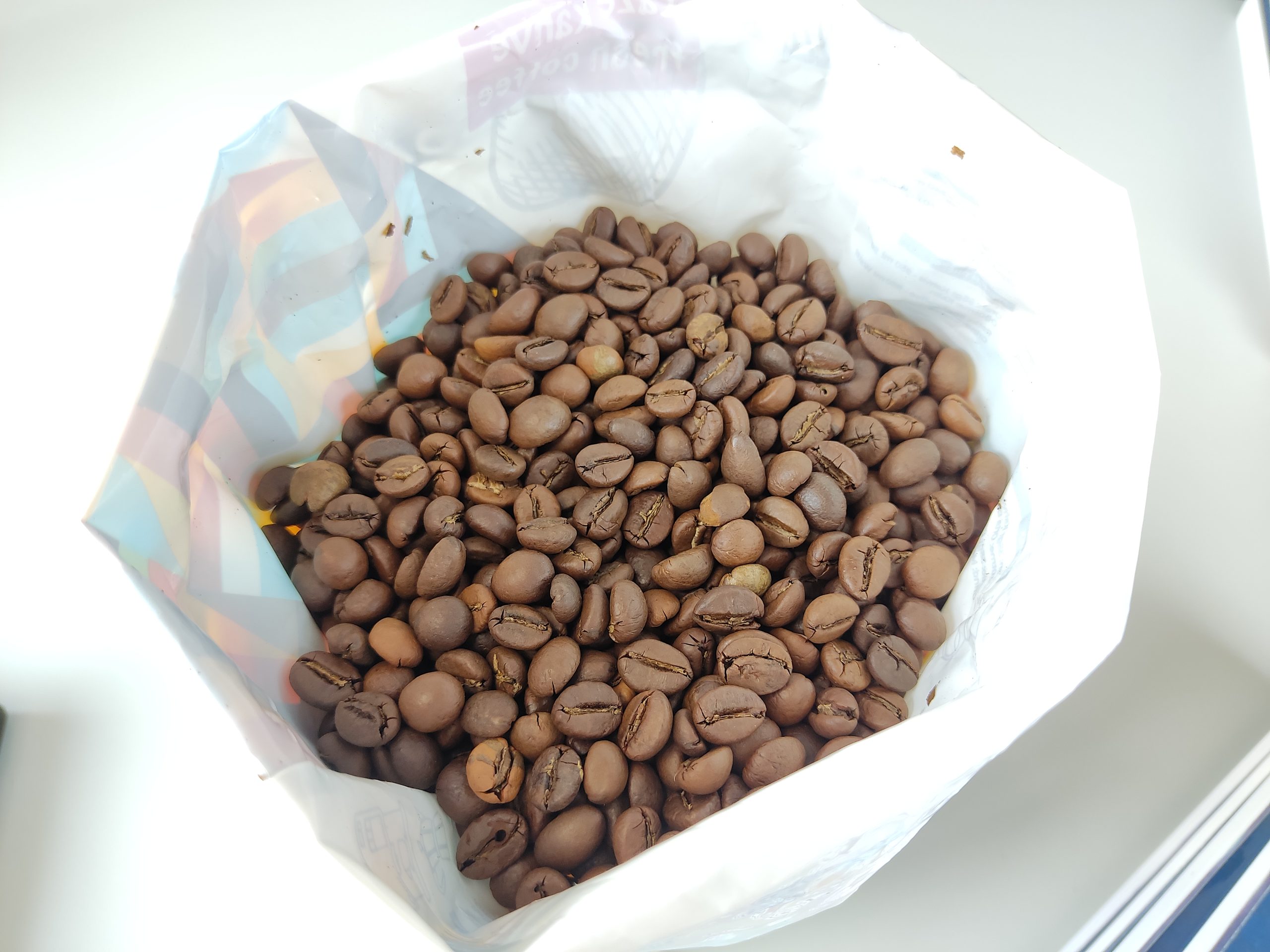
Step 2) Grind the Coffee Beans
Weigh out 11 grams of coffee beans. Then grind your beans finer than the grind used for pour-over but coarser than espresso.
Step 3) Heat the Water
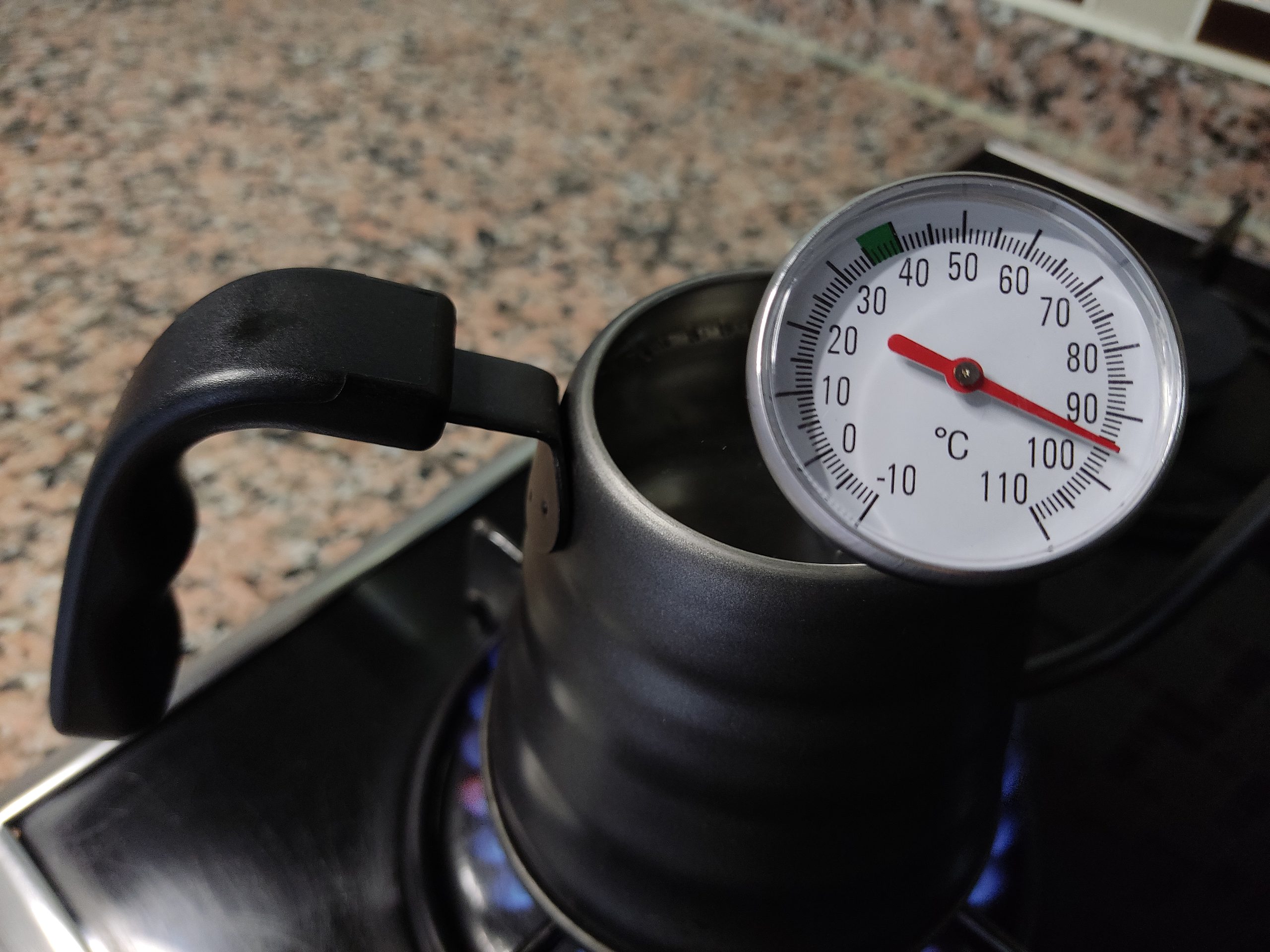
Heat your water to the appropriate temperature for your coffee beans. Use higher temperatures for light roasts and relatively lower ones for darker coffee beans.
James Hoffmann’s recommended water temperatures according to roast levels:
- Light Roast: Boiling Water
- Medium Roast: 90 – 95 °C (194-203 Fahrenheit)
- Dark Roast: 85 °C (185 Fahrenheit)
I do not prefer light roast coffee beans due to their high acidity, nor dark roast coffee beans due to their smoky flavors. Therefore, I usually prefer medium-roast coffee beans. In this case, the target temperature should be 90 – 95 °C.
Step 4) Add Coffee Grounds and Water
Add the coffee grounds to your AeroPress first, then pour 200 ml of hot water. Make sure to wet all the grounds when pouring the water.

Step 5) Insert the Plunger and Wait
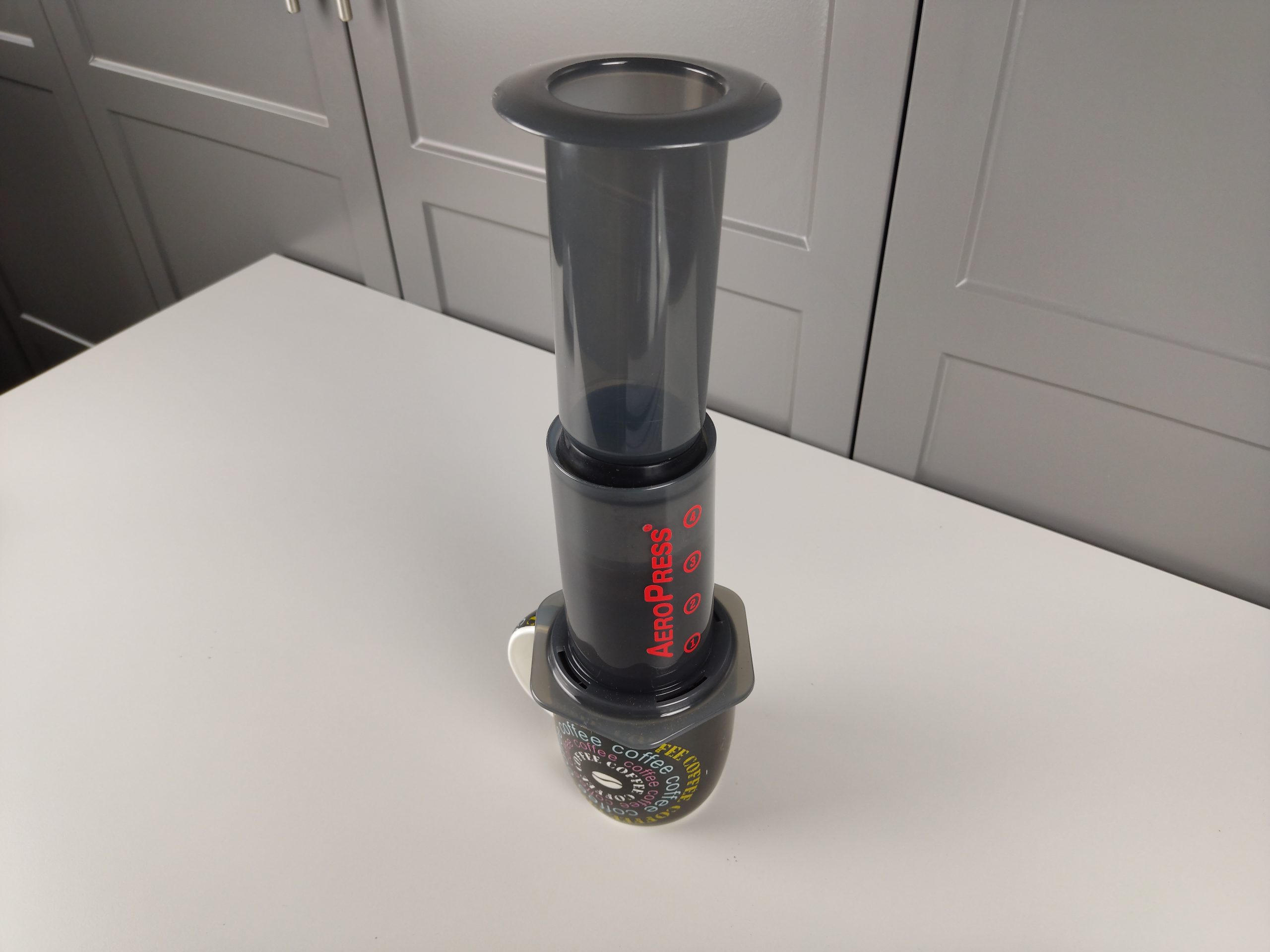
Insert the plunger into the chamber and pull it back slightly. This will create a vacuum effect and prevent the water from flowing out from the bottom. Then wait for 2 minutes to brew.
Step 6) Swirl and Wait
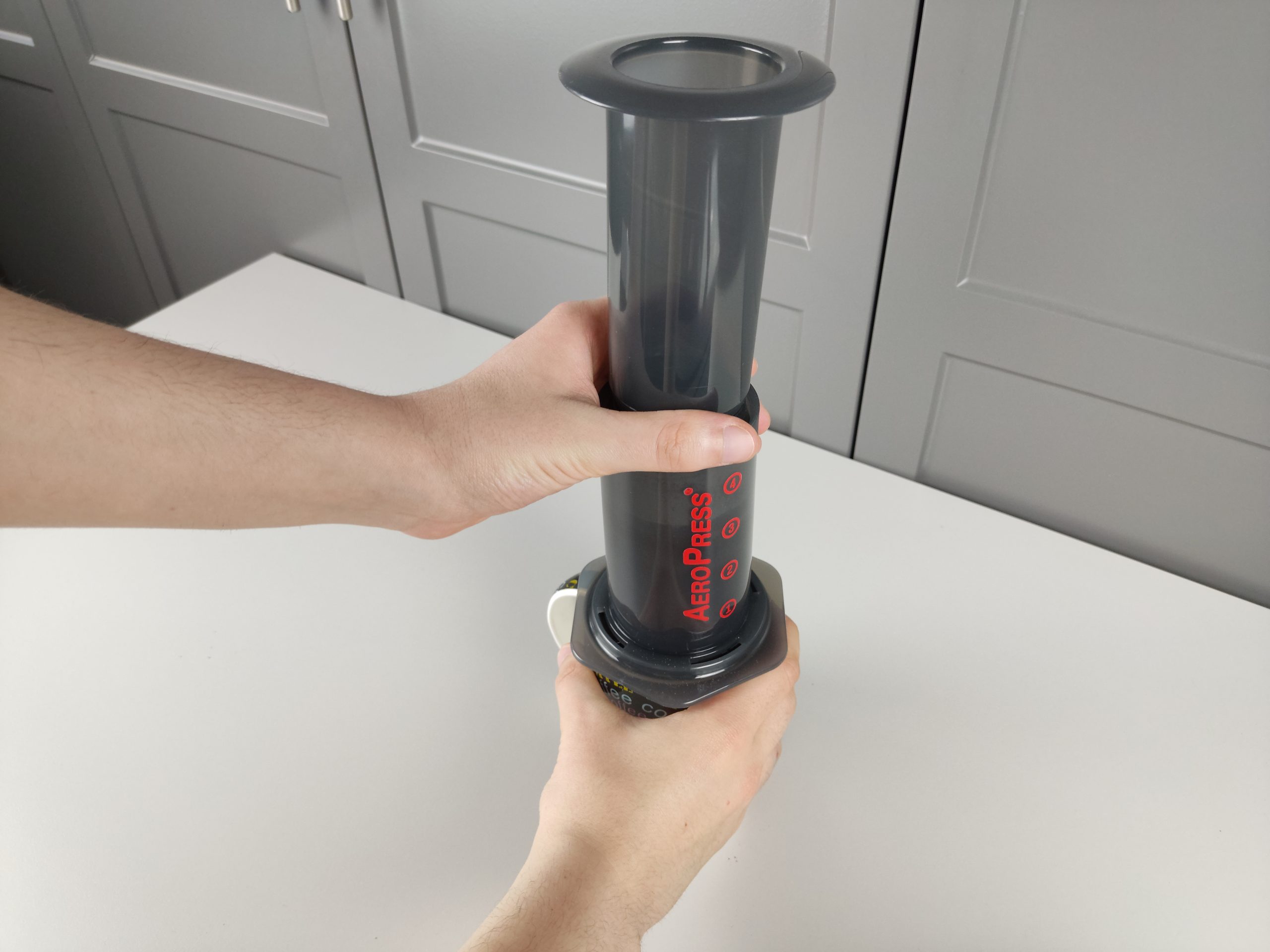
Hold the AeroPress with one hand and the mug with your other hand. Gently swirl and wait for another 30 seconds.
Step 7) Press and Serve
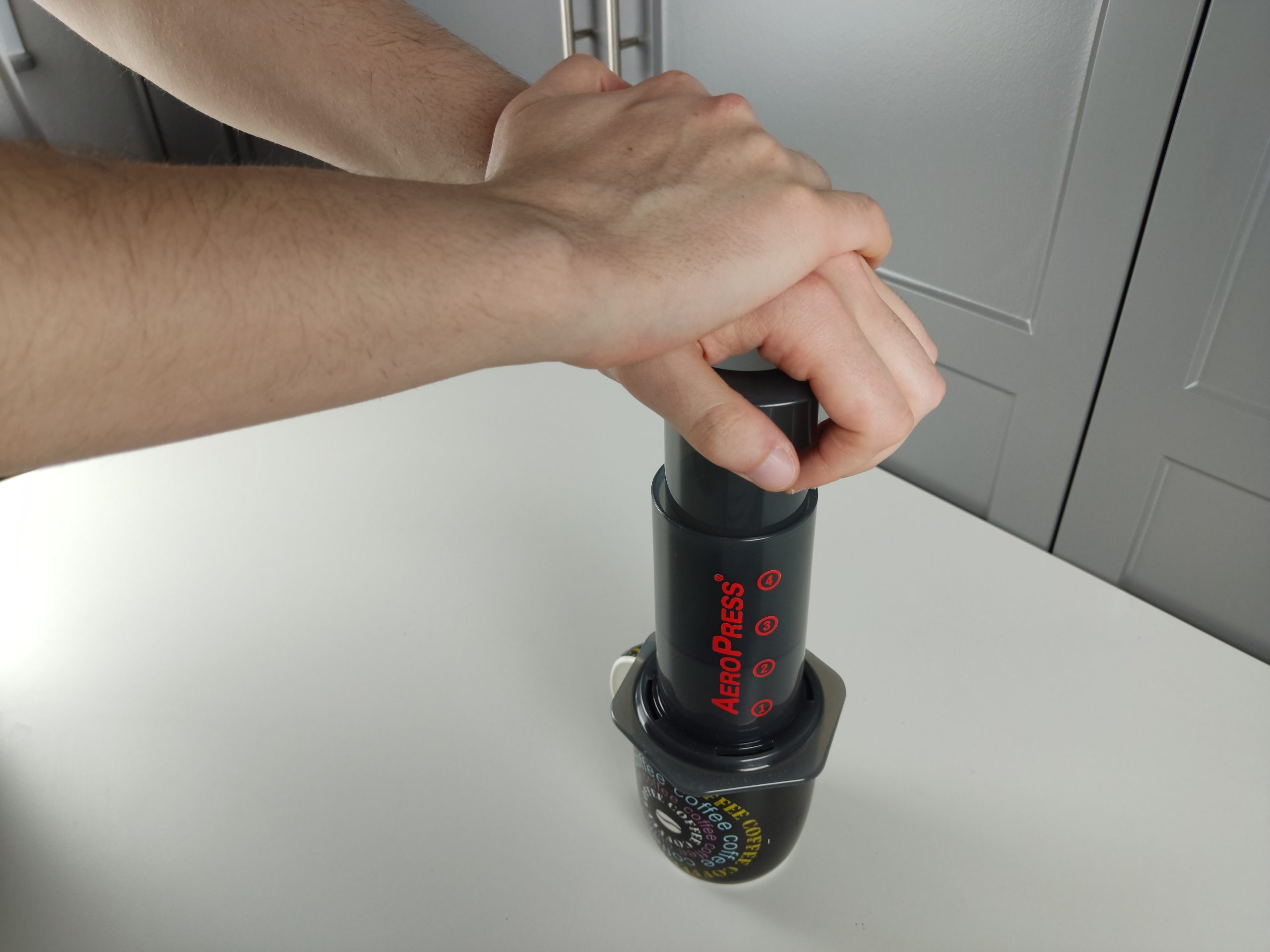
Press the plunger. However, don’t apply too much force. This pressing process will take about 30 seconds. Once you hear the hissing sound, set the AeroPress aside and serve your coffee.
Conclusion for James Hoffman Style AeroPress Coffee
James Hoffmann’s AeroPress recipe makes brewing coffee easier. If you’ve ever burned your hand while rinsing the AeroPress paper filter, I’m sure you’ll understand me better 😊
Furthermore, this quick and practical recipe can be easily implemented at home. It simplifies the coffee brewing process rather than making it rocket science.
One of my favorite aspects of this recipe is that it suggests appropriate water temperatures for different roast levels. Therefore, there’s something for everyone in this recipe.
Related Recipes
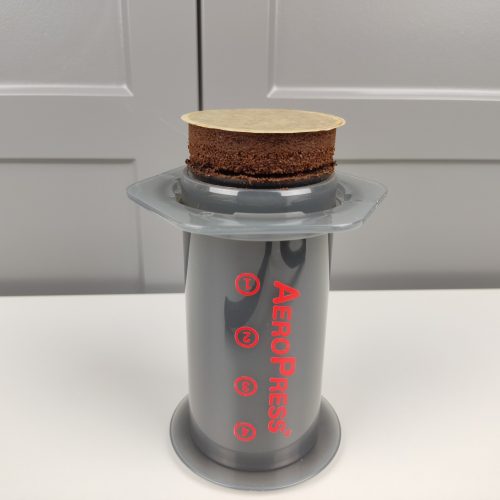
James Hoffmann's Ultimate AeroPress Technique

Equipment
- 1 Grinder
- 1 Scale
- 1 Thermometer
Ingredients
- 11 gr Coffee Beans
- 200 ml Hot Water
Instructions
- Prepare Your AeroPressPlace the paper filter in the filter cap of the AeroPress and attach the filter cap to the chamber. Then place the AeroPress on a mug or carafe.
- Grind the Coffee BeansWeigh out 11 grams of coffee beans. Then grind your beans finer than the grind used for pour-over but coarser than espresso.
- Heat the WaterHeat your water to the appropriate temperature for your coffee beans. Use higher temperatures for light roasts and relatively lower ones for darker coffee beans.James Hoffmann’s recommended water temperatures according to roast levels:Light Roast: Boiling WaterMedium Roast: 90 – 95 °C (194-203 Fahrenheit)Dark Roast: 85 °C (185 Fahrenheit)I do not prefer light roast coffee beans due to their high acidity, nor dark roast coffee beans due to their smoky flavors. Therefore, I usually prefer medium-roast coffee beans. In this case, the target temperature should be 90 – 95 °C.
- Add Coffee Grounds and WaterAdd the coffee grounds to your AeroPress first, then pour 200 ml of hot water. Make sure to wet all the grounds when pouring the water.
- Insert the Plunger and WaitInsert the plunger into the chamber and pull it back slightly. This will create a vacuum effect and prevent the water from flowing out from the bottom. Then wait for 2 minutes to brew.
- Swirl and WaitHold the AeroPress with one hand and the mug with your other hand. Gently swirl and wait for another 30 seconds.
- Press and ServePress the plunger. However, don’t apply too much force. This pressing process will take about 30 seconds. Once you hear the hissing sound, set the AeroPress aside and serve your coffee.